
If you’re like most CMOs, account managers, or even business owners, you’ve come here to see how you’re faring compared to the rest of your industry.
You already know how important conversion rates are when measuring the effectiveness of your brand’s marketing mix.
Yet one caveat worth mentioning is that it’s not a level playing field.
Every brand and website is different in its:
- Offers (high ticket vs low ticket)
- Perceived risks of purchasing
- Website speeds and user experience
- Compelling copywriting that’s persuasive
- Brand touchpoints (live chat, forms, etc.)
This stands to reason that perhaps in the future when specific industries employ better online marketing strategies (and better website experiences), these statistics will skew in their favour and increase the average.
Until that happens, let’s dig into the juicy stats cited from multiple reputable sources.
Before we get started, here’s a little refresher on how to calculate website conversion rates:
The percentage of people that take the desired action on your website (converters).
Divided by
The percentage of those who did not take action (a.k.a. total visitors).
Multiplied by 100
It’s implied that the higher your website’s conversion rate, the more your content resonates with your website visitors.
But that doesn’t mean all conversions are equal.
Even with robust lead qualifier forms, sales reps still get tire-kickers.
And eCommerce brands that generate sales often find that the conversion value is (mostly) different for each visitor.
For example, in the video games industry, a report stated that 50% of a game’s revenue came from just 0.15% of its users (a.k.a. whales).
What is a good website conversion rate?
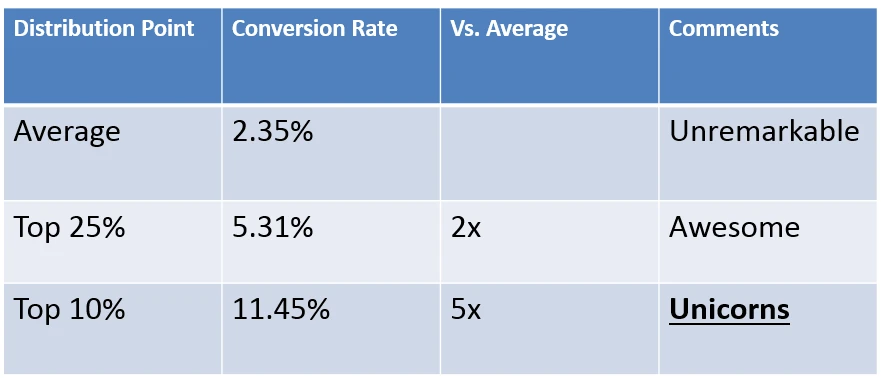
Popupsmart says a conversion rate of 2 per cent to 5 per cent is considered average.
So it’s implied that anything greater than 5% is a good website conversion rate (or above average).
To complement these benchmarks, WordStream reported similar stats back in 2018.
You’ll notice the numbers are essentially the same as above:
“In some industries, even 5% conversion rates aren’t that impressive.
If you’re stuck in the 2-5% conversion rate bucket, you have a ton of room to grow.“
Larry Kim, founder of WordStream
2020 Average website conversion rates by industry
Note: skip ahead to view the 2022 stats.
Courtesy of the research pros over at First Page Sage and Startup Bonsai (and a little help from Intellimize), the following are the average conversion rates for e-commerce businesses:
- Software and SaaS – 1.1%
- Scientific testing and measurement – 1.3%
- Higher education – 1.4%
- Commercial insurance – 1.7%
- Solar energy – 1.8%
- Non-for-profit – 2%
- Shipping and logistics – 2.7%
- Electrical equipment – 2.7%
- Commercial real estate – 2.8%
- Lending and loan services – 3%
- Medical and equipment devices – 3.1%
- FMCG and packaged goods – 4%
- Finance services – 5.01%
- HR & staffing – 5.1%
- Law firms – 7.4%
- Media and publishers– 10%
2021 Average website conversion rates by industry
In contrast to this, Unbounce published a robust study of conversion rates across landing pages per industry:
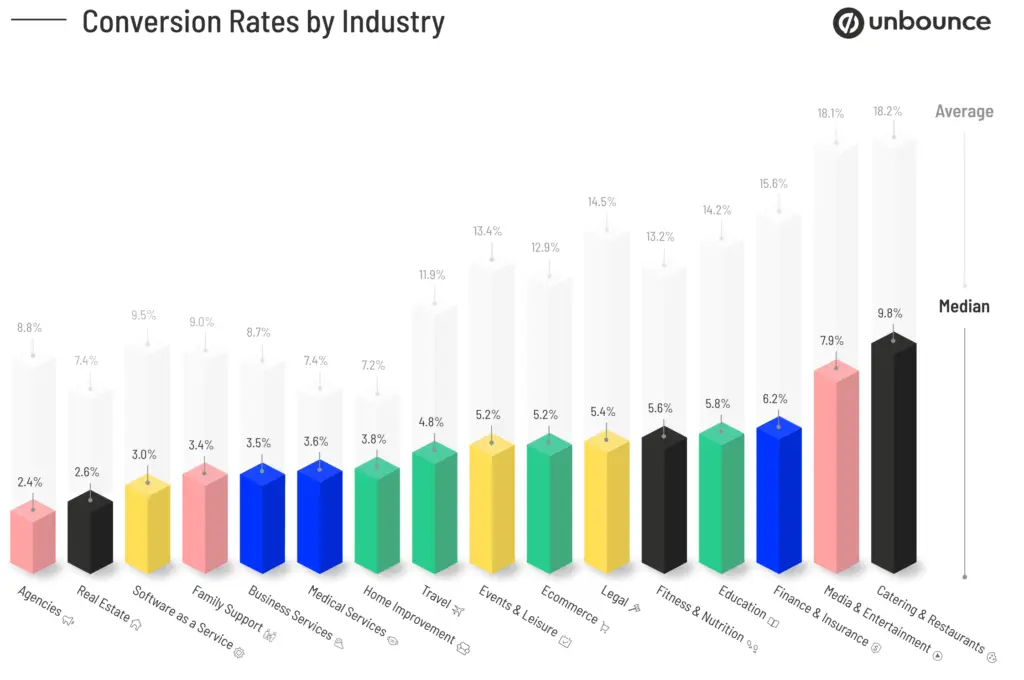
Average website conversion rates by industry.
However, the only issue with this study is that they’re only recorded on Unbounce landing pages:
“44 thousand Unbounce customer landing pages, including almost 264 million visits that culminated in over 33 million conversions”
Either way, a sample size of 264 million is nothing to shy away from.
You can comfortably get an inference on the averages across industries.
2022 Average website conversion rates by industry
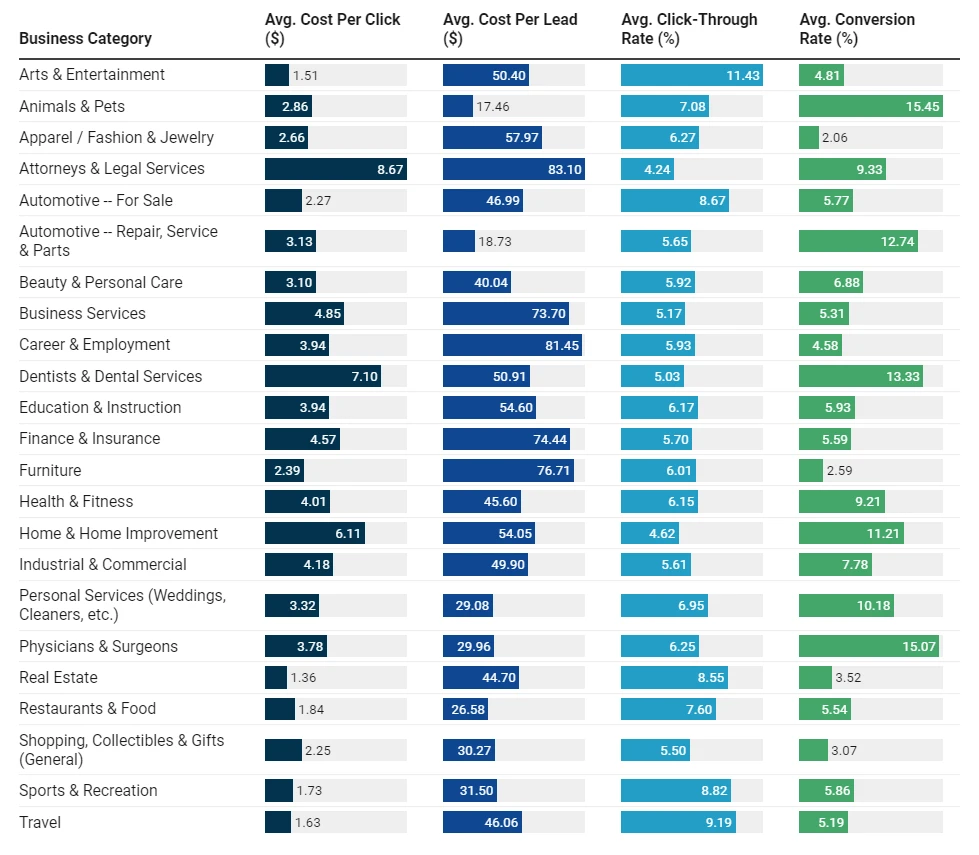
What you see below is Google Ads data provided by our friends over at WordStream (again).
This time, on the right-hand side, you’ll see the conversion rates for your industry.
One thing to note is that just because it’s data collected by Google Ads does not discredit the results in the slightest (a misconception I hear from a few marketers and business owners).
For example, when running Google ads, the primary metric you need to consider for ad performance is the CTR (and conversions/value/ROAS, depending on the business’s model and goal).
Whereas the conversion rate tells you mostly how well the landing page did its job.
If the conversion rate is poor, it’s more likely that the website/landing page needs some work.
As these stats have now been justified, here’s a look at your industry conversion rates for 2022:
(See right-hand-side)
What’s interesting is how high the conversions are for the medical and pet verticals:
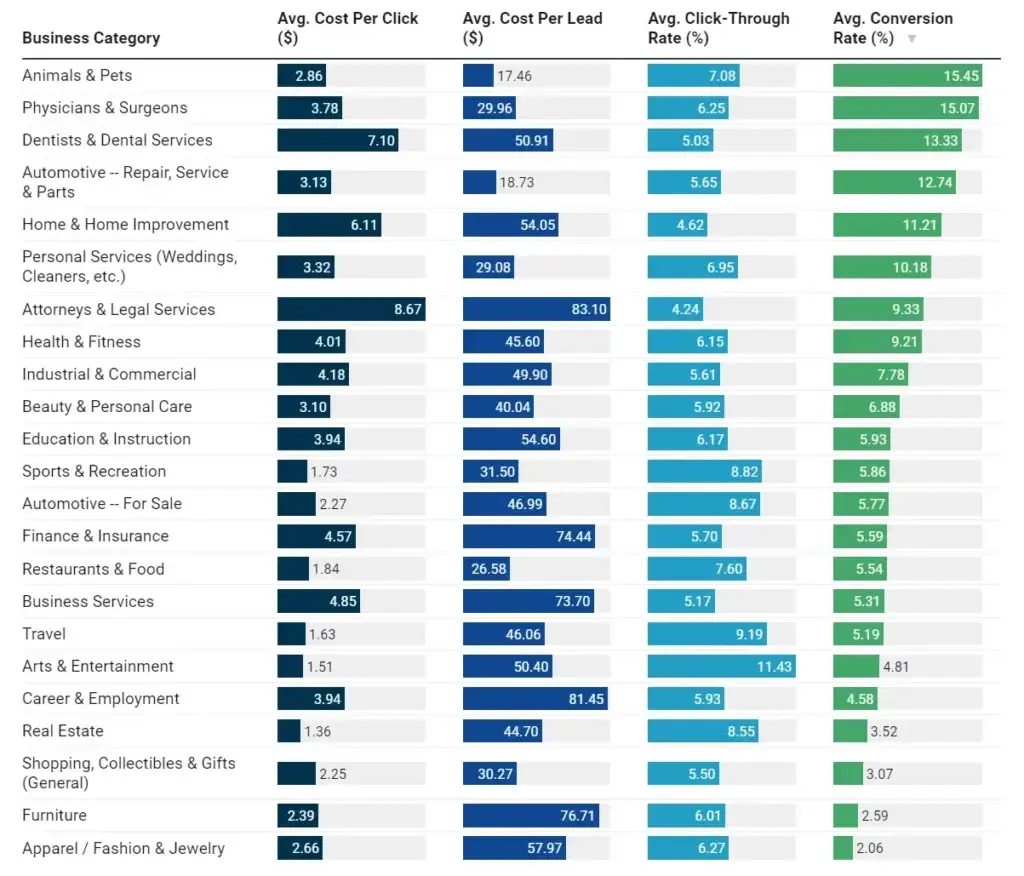
(See right-hand-side)
There you have it!
I’ll be back to revisit this page as new data comes in over the years.
How to improve average website conversion rates
As a way to serve you with some ideas you may not have thought of, here are some tips I’ve used with my digital marketing clients that have proven to work across hundreds of niches (now adopted by some of the world’s leading digital marketing agencies).
Add social proof
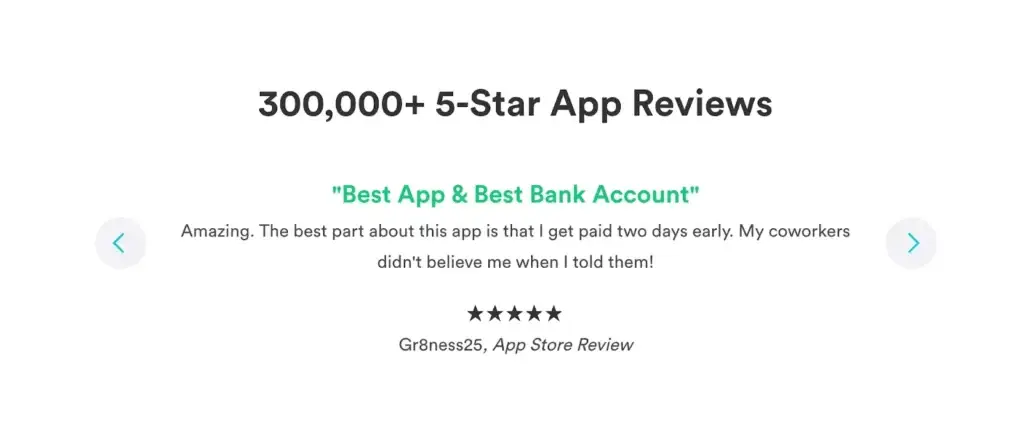
Social proof in the form of testimonials, associated brands, and client logos adds a boon to your online trust.
People generally have a cognitive bias when they filter through the information on your website.
I’ve found that when you show familiar brands or numerous reviews, you alleviate their distrust of your brand from the get-go.
How I like to think about this is that every person visiting your website:
- Does NOT like you
- Does NOT care about you
- Does NOT think of you as an expert
- Does NOT trust you
By setting the bar extremely low, you think of new ways to help the user become more comfortable with your brand.
It’s kind of like a dance.
You need to use subtle yet powerful symbols, statements, and images to elevate your brand’s trust as a website visitor loads the first few seconds of your web page.
This doesn’t mean overselling or trying to prove yourself.
More to the fact that you’re adding placements of brand logos and reviews strategically across your web pages.
That’s why it’s good practice to showcase familiar brands (even if they’re remotely familiar) above the fold (before someone needs to scroll down on their device) if you can help it.
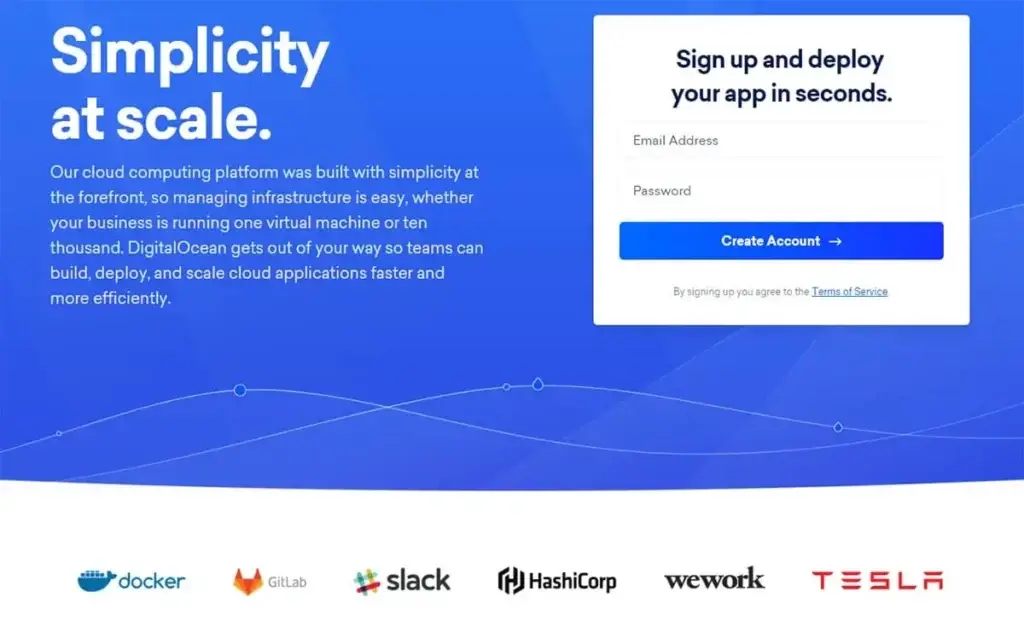
So to summarise, try and incorporate a mix of the following on every sales page (pages intended to bring you more leads or sales):
- Testimonials (screenshots of Google or Facebook reviews, video testimonials, or well-designed text reviews)
- Affiliated logos (whether it’s a supplier, a brand you work with, or any kind of affiliation you have)
- Client logos (some brands require permission. So do this first if you’re not confident)
- Accreditation logos (whether it’s the brand committee you’re involved in, club, or industry group)
- Awards or accolades won (rather obvious to include if you can)

Really just think of anything you can place on your website that will create that trust in your brand without trying too hard to prove yourself.
Add Unique Selling Propositions (USPs)
USPs are incredibly important if you want to stand out from the competition.
Some industries are expected to showcase a slew of benefits when prospects are in a hurry to decide.
For example, if you think about an emergency locksmith, the person who would be in-market for these services would be in a rush.
They’ve locked themselves out of their home or vehicle and need to get back inside ASAP.
It’s cold or dark outside, and it’s a real inconvenience.
When these people search for an immediate solution online, they’d like to see some tangible benefits of hiring the locksmith within the first 3-7 seconds of visiting a web page before making a phone call.
And usually, these benefits need to target the specific pain point at the top of this persona’s priority list.
For example, “we’ll be there within 17 minutes” (they’re in a hurry), “100+ 5-Star ratings” (they want to trust the person), “Fast & Reliable” (they need someone reliable and quick), etc.

Add Compelling Headlines Using Personas
Every week, prospects come to me asking why their website isn’t performing well.
And in almost all cases, the reason is that the content is all about them: “we’re the best”, “brand is experts in”, “we do this”,… it’s dry and dull.
The reason why these pages do not work is that they’re not speaking to the target persona.
I don’t mean those wishy-washy personas, either.
You know, the ones that branding agencies sell you on giving you “perspective” on your target audience.
No.
I mean personas that identify the exact emotional pain points and desired outcomes that your audience craves.
To write compelling headlines there’s no point in writing whatever comes to your mind if you don’t understand your audience properly.
For example, let’s say that someone with physical disabilities needs to see a physio.
Yet they struggle to get out of bed.
They’re in pain some of the time, but what annoys them is their lack of movement.
They won’t feel motivated to do things.
To understand this target persona, you need to have a deep brainstorming session and write everything down in bullet-point lists.
Then, you just need to confirm your assumptions using big data tools (or manually perform keyword research, browse discussions on socials, niche forums, etc.).
I’ll show you a barebones example that I use for clients, and I bet you’ll be able to see the value in how this helps you write compelling headlines:
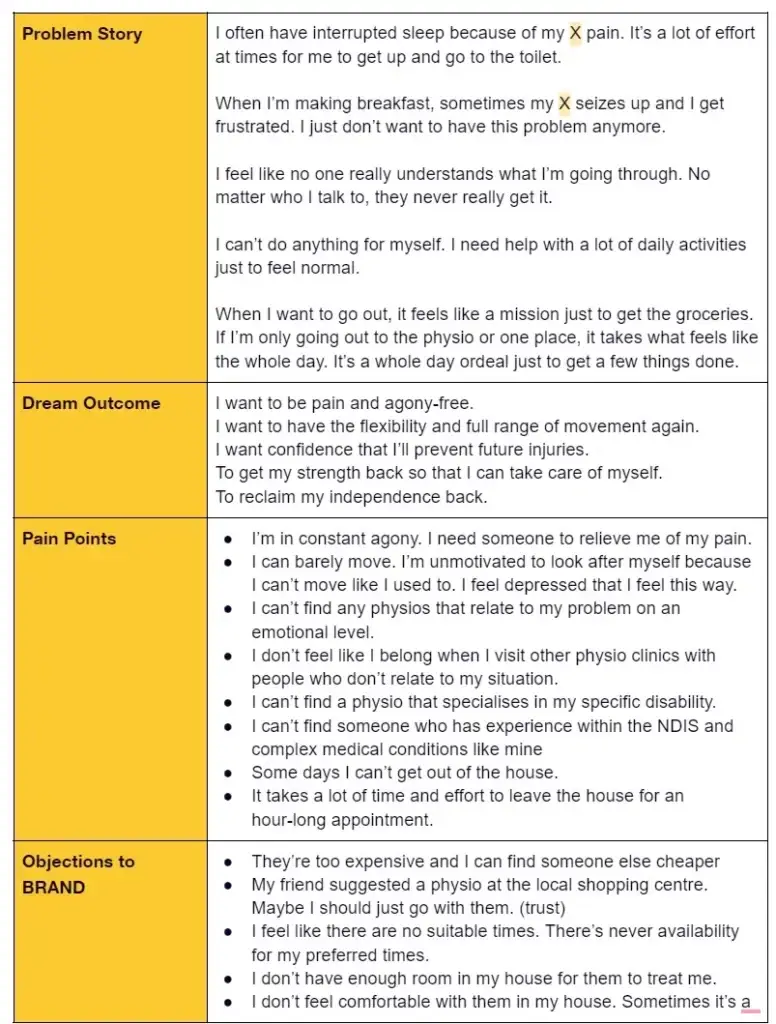
If you’re still unsure of the value of these, I’ll break it down for you briefly here (this may require a more in-depth article in the future).
You want to ensure that you reverse-engineer the persona’s pain points and desires and use them in headlines.
For example, let’s take two of the pain points from above for this mobile physio’s target audience:
- I’m in constant agony. I need someone to relieve me of my pain.
- I can barely move. I’m unmotivated to look after myself because I can’t move like I used to. I feel depressed that I feel this way.
Now, let’s say we have to write a headline for the top of the home page for this mobile physio.
According to this persona, we would need to think of a headline that incorporates avoiding pain and gaining movement.
It can be a delicate process and may take a lot of different headline variations before you come across one that works:
“Experience the joy of regaining your natural movement without pain.
At BRAND we come to you.”
The above contains a brand keyword for this physio, strategically placed as an h1 tag.
But we can talk about that in another article.
Final Thoughts (for now)
Improving your average website conversion rates can be a tricky business.
It requires a lot of split testing, thoughtful wordplay, and strategic sections.
In my experience, aside from the flashy-looking website designs and the flair that comes with hiring someone to build a $100k website, the thing that moves the money needle the most for businesses is the exact words used on a web page.
Russell Brunson proves this daily with people making millions of dollars using his ClickFunnels product.
The websites look terrible like someone built them using Microsoft Paint.
However, they’re effective as hell.
This shows that increasing online sales does not require a silver bullet or sly trickery.
The single most powerful thing to increase online sales is knowing your target audience.
As dull as that sounds, it means drilling down your audience’s exact pain points and desires.
If you understand that, it doesn’t matter how tacky your website looks; it will still probably beat most of your competitors (depending on the niche).