

Let’s face it, keyword research can be overwhelming, especially for beginners.
But with the right tools and techniques, you can uncover a treasure trove of keywords that your target audience is searching for
And that’s where this beginner’s guide comes in.
I’ve distilled the complex world of SEO and keyword research into simple, easy-to-follow steps that anyone can implement.
Whether you’re a solopreneur, a small business owner, or a marketing manager at a large corporation, this guide will give you the knowledge you need to drive more traffic, leads, and sales to your website.
So, let’s dive into how to do keyword research for SEO.
What is keyword research?
Let’s start with the basics — what are keywords?
They’re the words and phrases people use to find information online.
The trick is figuring out which ones they’re using and how to use them to your advantage.
That’s where keyword research comes in.
It’s the process of finding those keywords to help you create content that people are actually searching for.
But it’s not just about using any old keyword.
You need to find the ones that are relevant to your business and your audience.
That means understanding what your customers are looking for and how they’re searching for it.
This brings us to keyword intent
This is the most important thing you’ll need to take away from this guide.
But what is keyword intent?
Think of it like this: when someone types a query into a search engine, they’re not just looking for any old website — they’re looking for something specific.
That “something specific” is their intent.
- Are they trying to learn something?
- Buy something?
- Find a quick answer to a question?
- Find a particular website page?
If you want your website to show up for those searches, you need to make sure you’re targeting the right intent with your keywords.
For example, if someone types in “best pizza places near me,” their intent is probably to find a pizza joint to grab a slice.
So if you’re a pizza place, you want to make sure your website is optimised to show up in that search.
Understanding keyword intent is all about putting yourself in your potential customer’s shoes.
What are they looking for, and how can you give it to them in the fastest way possible?
What types of buyer intent keywords are there?
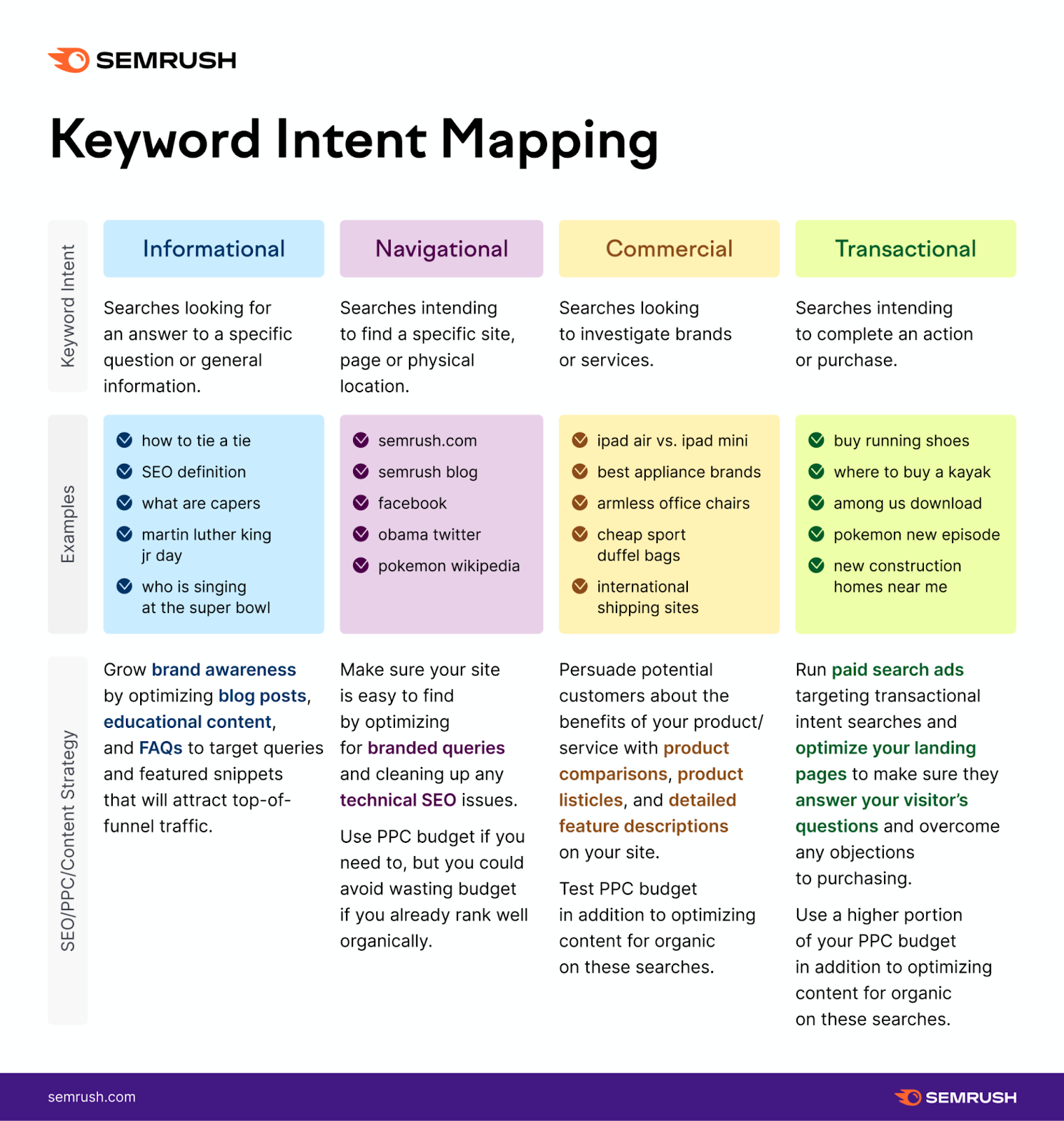
When it comes to keyword intent, there are four main types you need to know:
- Informational
- Navigational
- Commercial
- Transactional
Let me break it down for you real quick.
Informational keywords are when someone is seeking information on a topic, like “how to change a tire.”
Navigational keywords are when someone is looking for a specific website, like “Facebook login.”
Commercial keywords indicate that someone is in the market to make a purchase, but they’re still doing their research.
Think “best car insurance companies.”
And last but not least, transactional keywords are when someone is ready to buy, like “buy iPhone 13 online.”
But here’s the thing: it’s harder than it sounds.
Over a billion websites still don’t use keywords properly.
It’s kind of like knowing you need to exercise and eat healthy, but most of us don’t because it takes work.
How would you use these keywords in a practical sense?
Glad you asked!
Let’s say you run a business selling fitness equipment.
- You’d want to target informational keywords with blog posts on topics like “how to build muscle” or “best exercises for weight loss.”
- For navigational keywords, you’d want to optimise your website for searches like “fitness equipment store near me” or “buy workout gear online.”
- Commercial keywords could be phrases like “best home gym equipment” or “affordable fitness machines.”
- And for transactional keywords, you’d want to target searches like “buy treadmill online” or “purchase elliptical machine.”
By using these different types of keywords strategically, you can drive more traffic to your website and ultimately increase sales.
But here’s the thing — you can’t blindly chuck a bunch of articles and pages online.
You need to be organised and consistent.
So how do you organise your keywords properly?
This is where the hub and spoke model works.
Now, I know what you’re thinking… it sounds like rocket science.
But trust me, it’s not.
You’ve got this.
The hub and spoke model is a simple way to organise your keywords around a central theme or topic.
Here’s an example.
Let’s say you’re a fitness coach, and you want more customers that are trying to lose weight.
So naturally, you need to be a thought leader in your space by creating content around the topic of “weight loss.”
Your hub keyword would be “weight loss”, which you’d use in a blog post for a guide on “How to Lose Weight in X Days Without Doing X”.
This is where your spokes come in.
Your spokes are the related keywords that are closely tied to your hub keyword.
For example, this might be “healthy meal plans,” “effective workouts for weight loss,” “staying motivated,” and so on.
Each of these spokes would have its own blog post, but they’d all be linked to the hub’s blog post for “weight loss”.
It’s kind of like the hub page is the parent, and the spoke pages are the children.
And visa versa.
Your hub page should contain brief sections about the spoke articles and link back to those blog posts.
So you’re simply linking content between each other based on their relevancy.
Now, you might be wondering, why bother with all this hub-and-spoke business?
Google loves well-structured websites.
In fact, if you listen to Google’s John Muller, he speaks about how important structure is for your SEO.
And the main drivers to help Google understand your website are:
- What do the pages on your website mean?
- How are they related and connected to each other?
If you do the hub and spoke model, you’re fulfilling Google’s exact requirements here, putting you in the lead of so many competitors who’re not doing this.
And to reinforce this point, here’s how you know Google is dead serious about this…
Google is cracking down on poor-quality content
Gone are the days of stuffing keywords in every sentence.
Now, it’s all about providing value to the reader.
Let’s face it, nobody wants to read a bunch of gibberish that doesn’t make any sense.
But that’s the kind of sales pitch some SEOs have been pushing for decades:
“Oh no, the blog posts we’re writing for you are for the bots… it’s not for humans.
No one’s going to read them.
Don’t worry about that”.
Google has caught onto this, and they’re massive taking action.
They’ve recently launched a few updates that combat bad content:
- The helpful content update
- and the SpamBrain update
This means that even if you do try to game the system, it won’t work.
So, what’s the solution?
Simple — focus on quality content.
Create content that people actually want to read and engage with.
Content that answers their questions, solves their problems and keeps them coming back for more.
And don’t forget about the technical side of things.
Make sure your website is fast, user-friendly, and easy to navigate.
Because at the end of the day, Google wants to deliver the best possible results to its users.
So, don’t be like those SEOs who are still stuck in the past.
Brass tacks: how to do keyword research for SEO
Let’s cut to the chase.
Where do you start?
Once you’ve got a pretty good idea about your target audience and what they’re searching for, you need a keyword research tool.
Don’t worry; you don’t need to be a tech whiz to do keyword research.
There are plenty of free and paid tools out there to help you out.
Some popular ones are:
All three of which I personally use on a daily basis.
These tools will give you insights into the search volume, competition level, and relevance of different keywords.
You can also use them to spy on your competitors and see what keywords they are targeting.
But don’t get too hung up on the numbers.
Keyword research is just a starting point.
Step #1 — brainstorm keyword ideas
Alright, first things first, we have to brainstorm some keyword ideas.
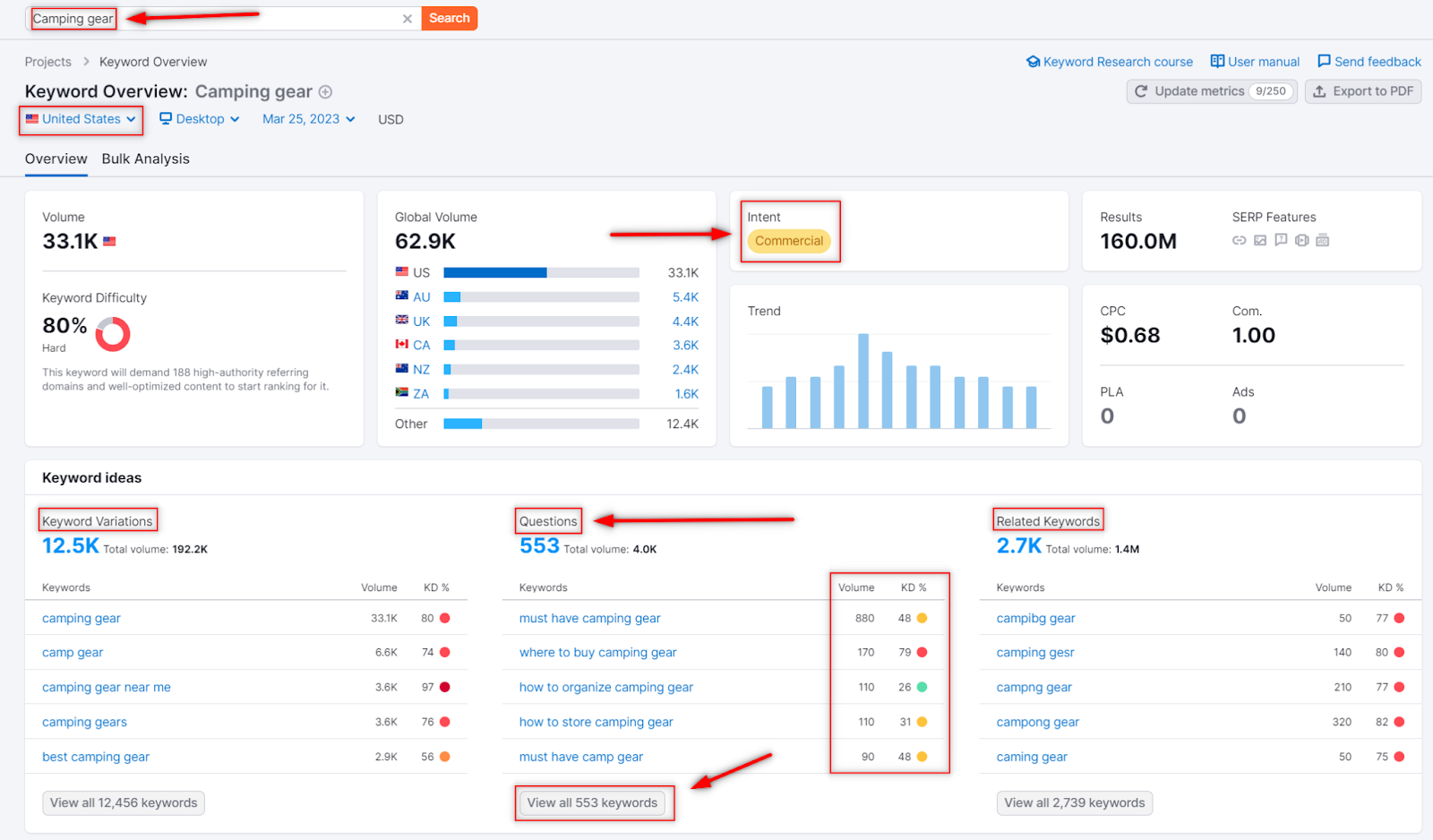
Basically, every keyword tool out there needs a seed keyword to get things going.
And that seed keyword is going to sprout into a long list of potential keyword ideas.
Just ask yourself, “What are people typing into Google to find my stuff?”
If you’ve already got a business or product you’re pushing, finding those seed keywords should be a breeze.
Just ask yourself, “What are people typing into Google to find my stuff?”
For example, if you’re slinging outdoor gear, your seed keywords might include:
- Tents
- Camping gear
- Outdoor cooking
- Hiking
- etc
Now, don’t get too obsessed with your seed keywords because you won’t necessarily target them on your website.
They’re just the starting point for the next steps.
Once you have a few broad ideas related to your website’s topic, let’s move on to the next step.
Step #2 — spy on your competitors’ keywords
Alright, now that we’ve got our own seed keywords, it’s time to see what the competition is up to.
No need to reinvent the wheel here — let’s take a peek at what’s working for them.
Fire up your chosen keyword tool and plug in your competitor’s URL.
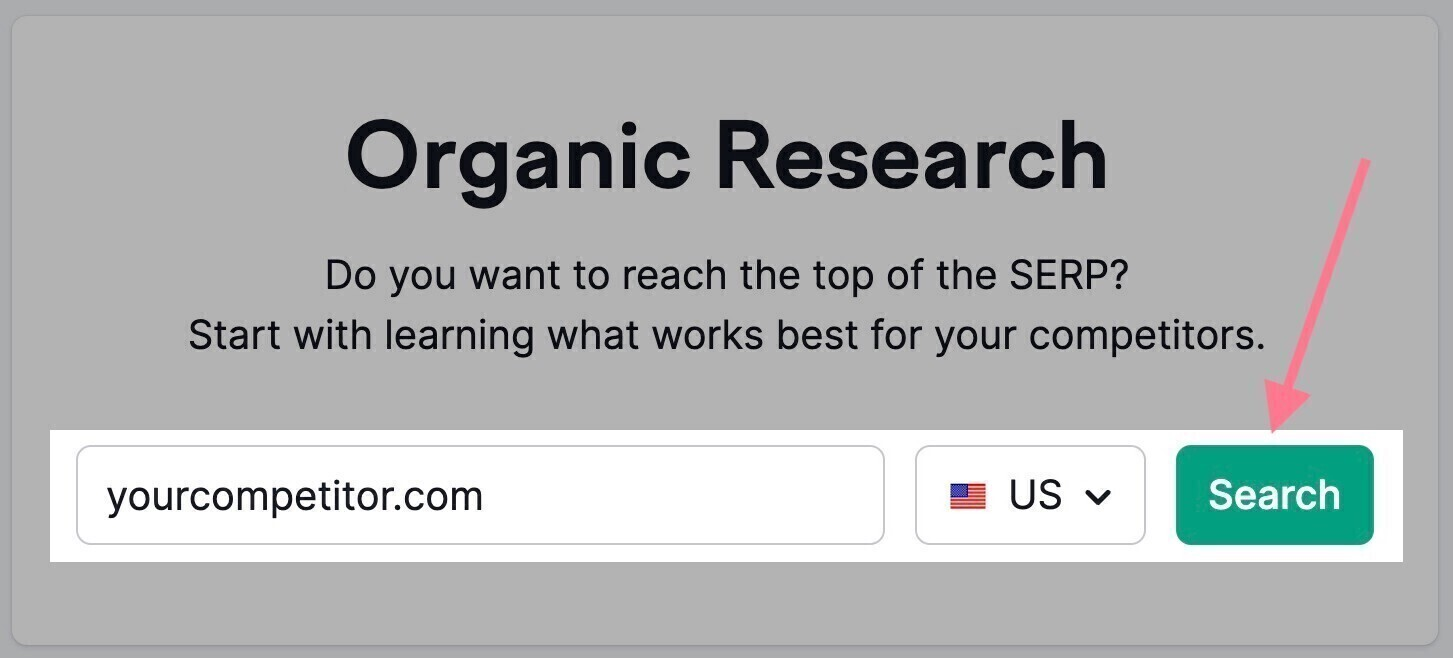
The tool will spit out a bunch of keywords that they’re ranking for.

Take note of the ones that are relevant to your own site, and add them to your list.
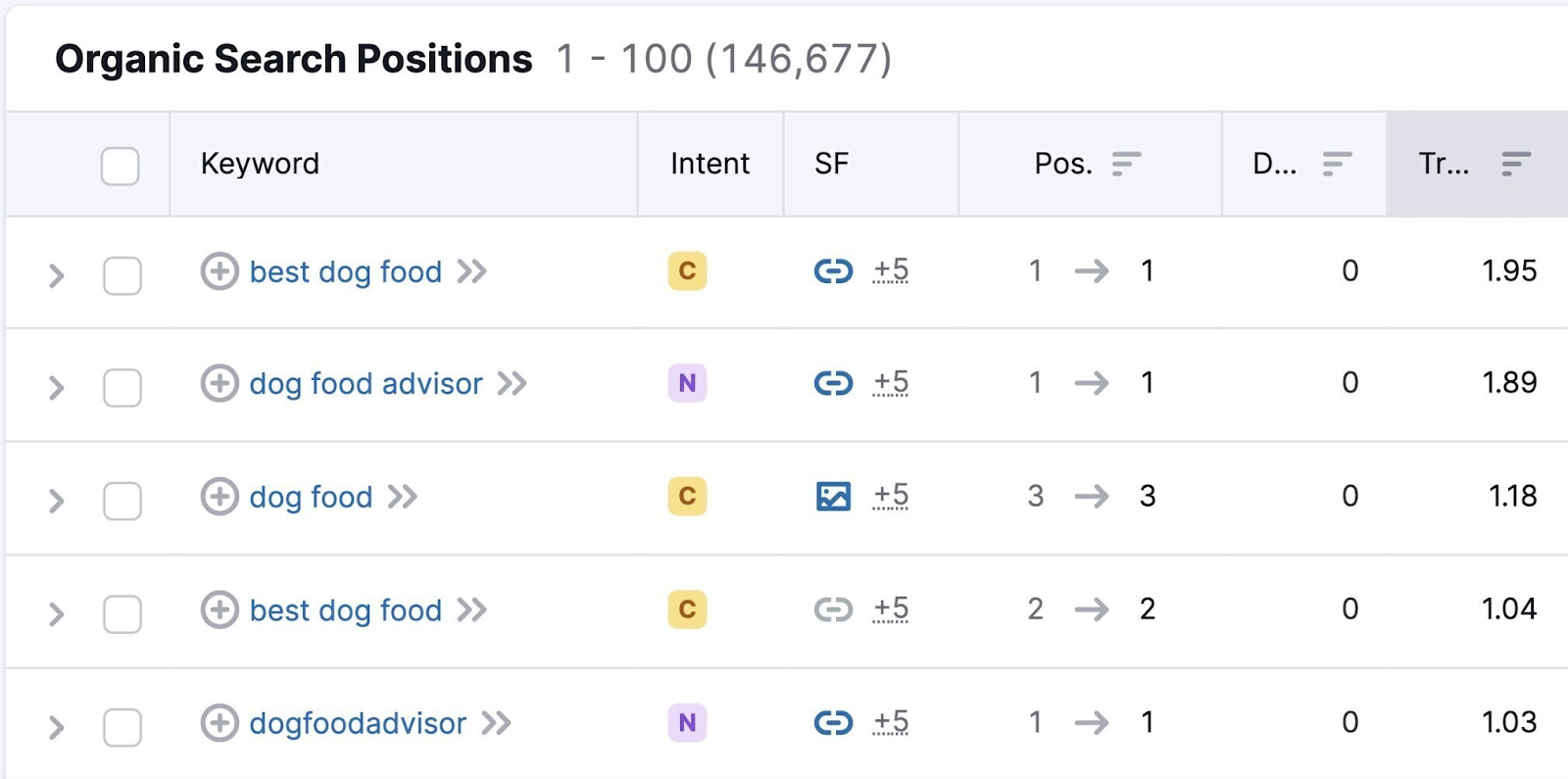
Then, repeat the process for a few more competitors, and you’ll have a decent list of relevant keywords.
Step #3 — create your content plan
This is where you get to put on your thinking cap and start mapping out what you’re going to publish.
Think of your content plan as your single source of truth for ALL of your website’s pages.
For example, here’s a quick Google Sheet of what a Content Plan may look like for SEO and this article you’re reading now:
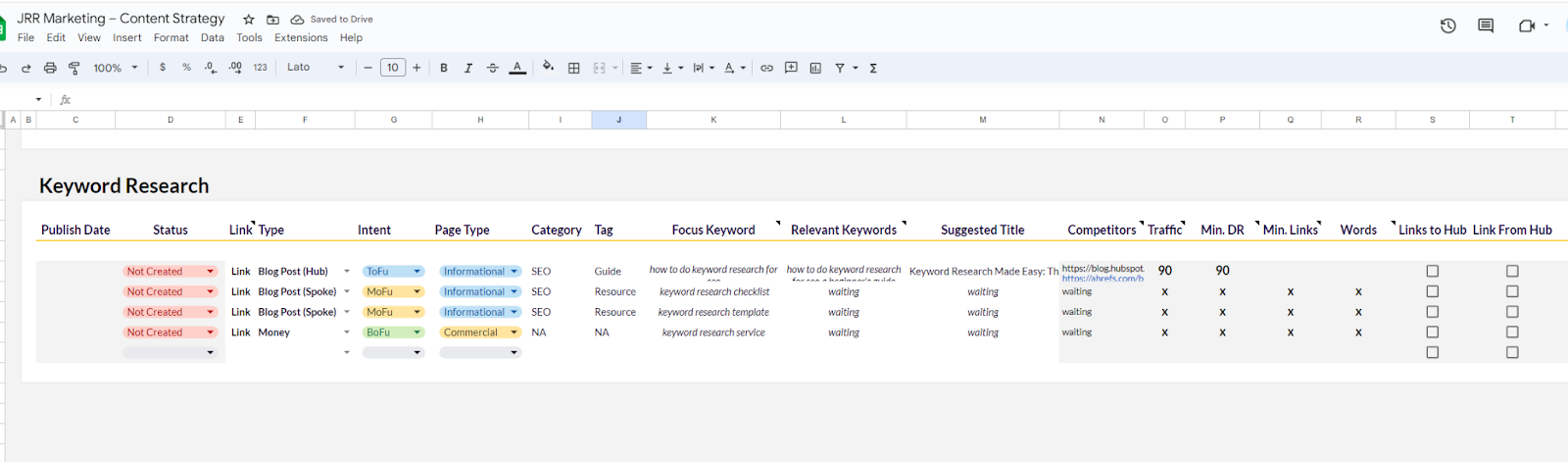
Let’s break this down for you.

- The topic is Keyword Research.
- The type is a Hub post.
- The intent is top-of-the-funnel (ToFu) — ignore this for now.
- The keyword intent type is Informational.
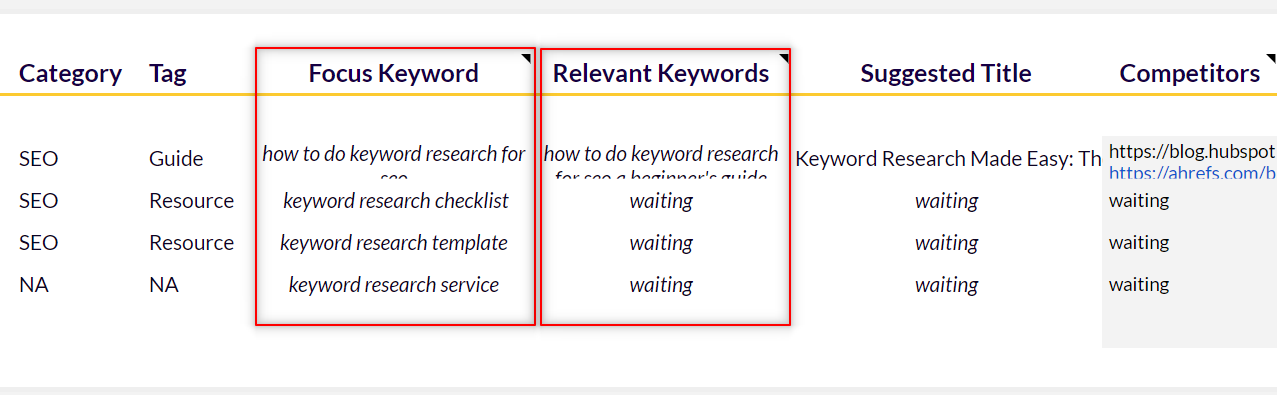
- The focus keyword is how to do keyword research for SEO.
- And I’ve also noted down some similar keywords next to it.
From the above, you can see that the article you’re reading now is a Hub page.
And I’ve jotted down some ideas for spoke pages that I could later write blog posts about.
Now, why is this important?
Well, having a content plan ensures that you’re not just throwing spaghetti at the wall and hoping something sticks.
It helps you stay organised and focused on what you want to achieve with your content.
Plus, it saves you time and prevents you from wasting time on spur-of-the-moment page ideas.
So, take the time to create a solid content plan.
Remember that the SEO content plan is a live document, which means that it’s never perfect.
It’s designed to be constantly updated and improved over time.
You’ll thank yourself later when you have a library of high-quality content that doesn’t overlap with each other in a bad way.
Step #4 — create content and optimise along the way
Alright, now that you have your content plan in place, it’s time to start creating content.
Remember, quality is key here.
You want to create content that’s valuable, informative, and engaging for your audience.
Make sure to optimise your content for your chosen keywords, but don’t stuff them in unnaturally.
Keep it natural and reader-friendly.
Google has a benchmark that it asks website owners to follow.
I’m sure you’ve seen it around — it’s called E-A-T.
E-A-T stands for Expertise, Authority, and Trustworthiness.
In other words, Google wants to see that your website is run by people who know what they’re talking about, are respected in their industry, and are trustworthy sources of information.
Now, let’s dive a little deeper into E-A-T.
- Expertise refers to the knowledge and expertise of the author or publisher.
- Authoritativeness refers to the reputation and authority of the author or publisher.
- And trustworthiness refers to the reliability and trustworthiness of the content itself.
These three factors work together to make sure that Google is providing its users with high-quality, reliable content that meets their needs.
So, how do you apply this to your content?
First, make sure that your content is accurate and well-researched.
If you’re making claims or statements, back them up with reliable sources.
Second, establish yourself as an authority in your niche.
This could mean getting published on reputable sites via guest posting, building a strong social media presence, or publishing a book or whitepaper.
Third, build trust with your audience by being transparent and authentic.
This could mean sharing your own experiences, using real-world examples, or being upfront about any potential biases or conflicts of interest.
By focusing on E-A-T, you’ll not only improve your SEO but also establish yourself as a reliable source of information in your industry.
FAQs
Why is keyword research important for SEO?
keyword research helps you figure out what words and phrases people are using to search for stuff on the web.
That means you can optimise your website with those keywords to make it easier for search engines to find and understand what your site is all about.
But here’s the kicker — not all keywords are created equal.
Some might have a tonne of competition, while others might not get searched for very often.
By doing your research, you can find those sweet spot keywords that have a good balance of search volume and competition.
Why should I use keywords with low competition and high traffic?
Unless you’re a big-time player with an army of SEO experts, you’re gonna have a tough time cracking those top keyword spots.
That’s where low-competition, high-traffic keywords come in.
They may not have the same search volume as those big hitters, but they also don’t have nearly as many brands competing for them.
This means that if you can optimise your content around these keywords, you’ll have a much better chance of climbing the ranks and getting that sweet, sweet organic traffic.
What are the best SEO tools for keyword research?
If you’re serious about getting your website to rank on the top of search engines, then you need to invest in some solid SEO tools for keyword research.
I’m not talking about those cheap knock-offs, either.
I mean the real deal.
Tools like Ahrefs, SEMrush, and Moz are the ones you want to be looking at.
They’ll give you all the data you need to find the keywords that are worth targeting.
So, don’t skimp on the tools; invest in the best, and watch your website climb to the top of the search engine rankings.
Go forth and conquer keyword research
So, there you have it — a beginner’s guide to keyword research and SEO success in 2025.
Now, I know this may seem like a lot to take in, but trust me, once you start implementing these strategies, you’ll be on your way to SEO success in no time.
Remember, it’s not about being an SEO expert overnight.
It’s about taking small steps and learning as you go.
So, take your time, do your research, and don’t be afraid to ask for help.
SEO can be a tricky game, but with the right mindset and tools, you can conquer it.
And who knows, maybe one day you’ll be the one that others look up to.
Until then, happy keyword researching.