
You’ve spent hours fine-tuning your Google Ads, agonising over the perfect keywords, and crafting compelling copy that you hope will draw a crowd.
And yet, the traffic trickles in like it’s too shy to enter a party.
Makes you wonder what your competitors are doing, doesn’t it?
Ah, if only you could take a sneak peek into their playbook.
Well, you can.
And no, it doesn’t involve any secret agent manoeuvres or hacking skills worthy of a movie plot.
So why should you even care about what ads your competitors are running?
Simple.
Seeing your competitors’ strategy can give you that edge you’ve been looking for.
It helps you figure out what you’re up against and how to one-up them.
By the end of this post, you’ll know how to see your competitors’ Google Ads in three easy steps.
No fuss, no complex jargon — just a straightforward guide to get you the information you need.
So go ahead, pour yourself a cup of joe, or tea, or hey, even a glass of wine — I’m not judging.
Why monitoring competitors’ ads is important
Now that I’ve whetted your appetite, let’s get down to why spying on your competitors is not just clever, but downright essential.
You see, in the world of digital marketing, information is king — or maybe the queen, if you prefer a matriarchy.
Either way, knowledge reigns supreme.
First, knowing what your competitors are doing helps you spot gaps in your own strategy.
Say they’re targeting an audience you’ve overlooked.
Congratulations, you’ve just found a potential goldmine without having to swing the pickaxe yourself.
You also get a read on market trends.
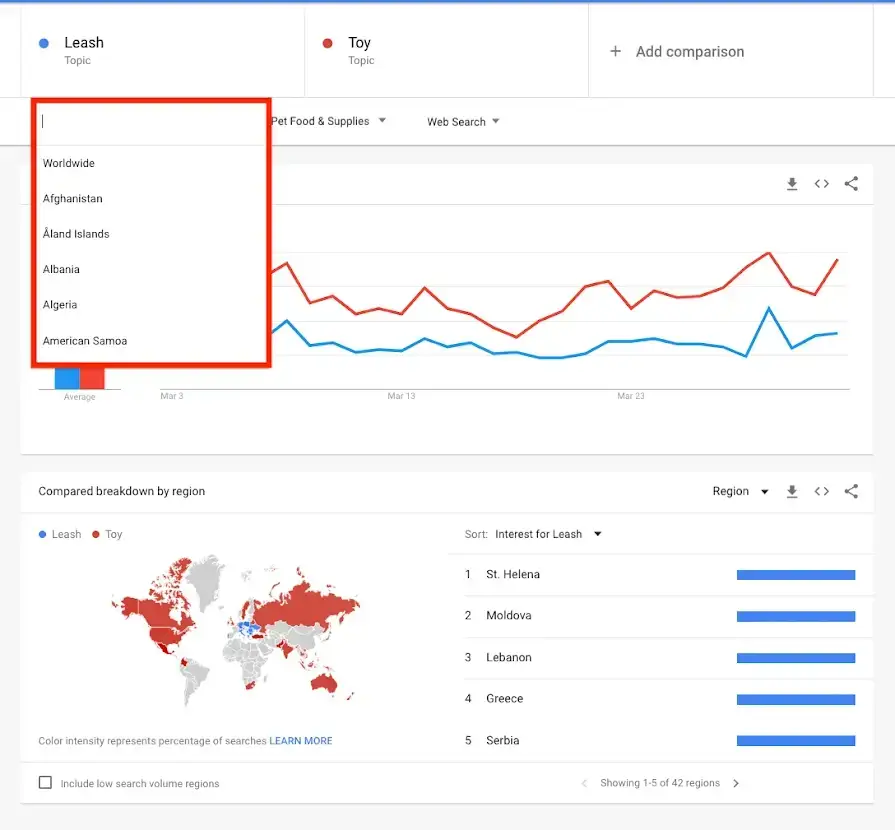
If several competitors are running similar ads, that’s a sign, a big one.
It says, “This approach is working; consider it.”
This way, you save time and sidestep the frustration of trial and error.
Now onto messaging.
Crafting an ad that hits all the right notes is tough.
But if you see what language and offers your competitors are using, you glean into what your audience wants to hear.
Finally, monitoring competitors keeps you agile.
Advertising is a fluid game.
By keeping tabs on the competition, you can adapt your strategy on the go.
This ensures you’re not just in the game but ahead of it.
How to see competitors Google Ads – what you need to get started
Before we journey down this enlightening path, let’s check off some basics.
You’ll need a computer, a decent internet connection, and an itch to get the low-down on your competition.
So, as long as you’re not trying to do this from a stone tablet or a typewriter, you should be good to go.
Step 1: choose a tool for the job
Why a good tool matters
Listen, the internet is swarming with tools for everything — some good, some terrible, and some merely okayish.
Picking the right tool for competitor analysis isn’t just a nice-to-have; it’s a must.
The right tool will give you precise, actionable data in a format that’s easy to digest.
No vague metrics, no cryptic analytics, just straight-up useful ideas that you can implement right away.
My go-to freemium tools to consider
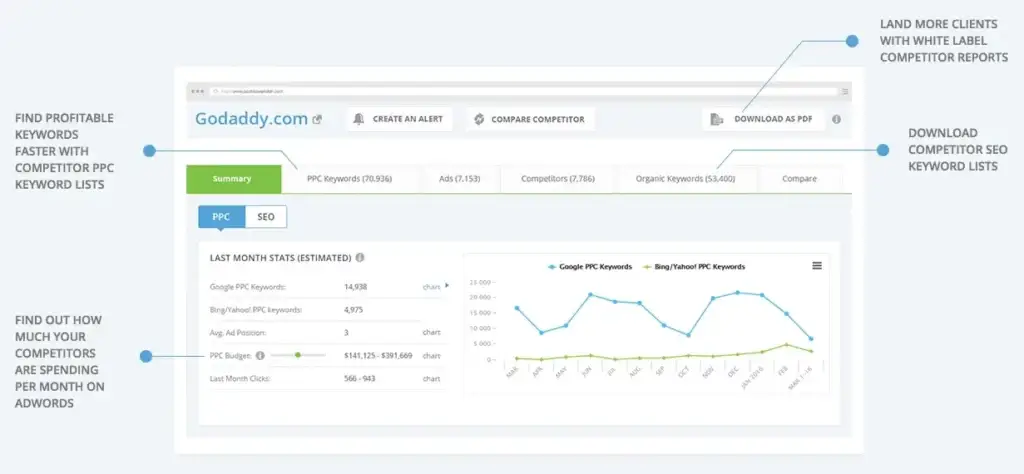
Honestly, this is the one I find myself using a lot.
It’s good for getting a peek at what your competitors are up to, like which keywords they’re using and what their monthly ad spend looks like.
But what I find I use the most is to check out competitor’s landing pages and the exact words they use in their ads.
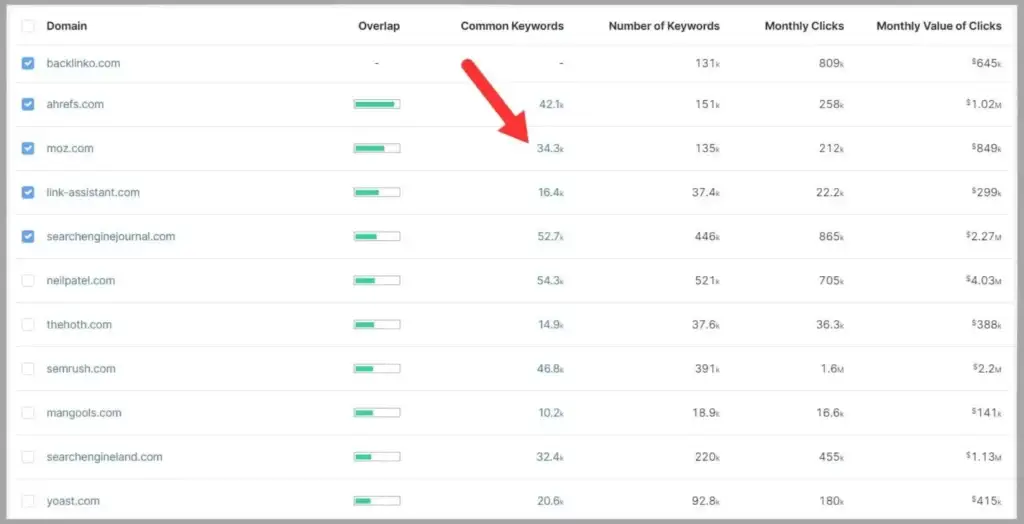
This one has a cool party trick: it can show you your competitors’ Google activity going back 17 years.
You can also download your competitor’s keywords, which can be eye-opening.
It doesn’t make your coffee in the morning, but it’s decent for what it does.
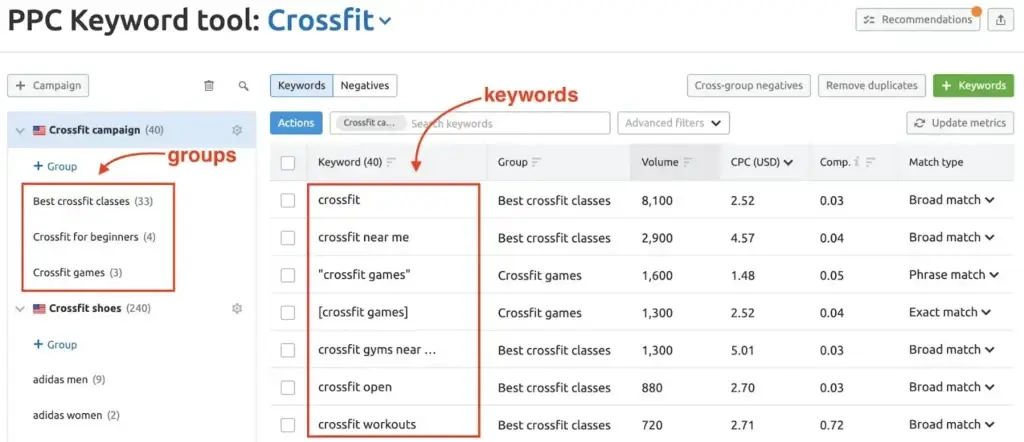
I know, it’s mainly used for SEO purposes, but the PPC tools are actually quite useful.
If you’re the type who wants a utility belt instead of just a wrench, Semrush could be your jam.
It gives you a broader view, not just focusing on PPC.
Good for those who love to deep-dive into data, but let’s be real, you’ve got to know how to swim first.
So, those are the basics.
iSpionage for a well-rounded look, SpyFu for a blast from the past, and Semrush for those who want a bit of everything.
What you choose depends on what you’re really after.
Ready to move on?
Step 2: type in a competitor’s website
Once you’ve got your tool of choice loaded up, the next step is feeding it some data to chew on.
And by data, I mean your competitor’s website.
But wait, who exactly counts as a competitor?
Let’s get into it.
How to identify a competitor
Selecting a competitor isn’t as easy as pointing at the business next door.
It should be a company that’s actually eating your lunch online.
Look at businesses that target the same keywords as you or show up where you want to be visible.
Also, consider their customer base; if they’re snagging the people you’re trying to reach, they’re your competition.
Forget the noise, focus on the ones who matter.
Performing the search
So you’ve got a competitor in mind.
Great, half the battle’s won.
Now, it’s time to actually punch in their website URL into the search bar of your tool.
It’s usually as straightforward as copy-pasting their website from your browser to the tool’s search bar.
Hit ‘Enter,’ sip your coffee, and watch as your tool serves up insights like your personal barista.
Step 3: review and analyse
Alright, you’ve got your hands on some intel.
What now?
Well, you could just stare at it, but that’s like buying a sports car and never driving it.
Time to dig in and make sense of all that data.
Understanding ads content
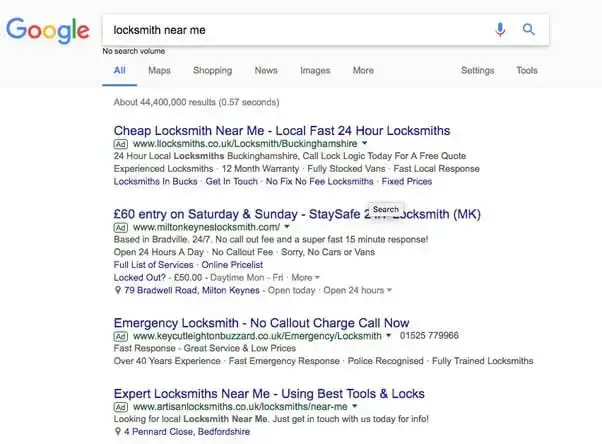
First off, let’s talk about the actual content of those ads.
Is your competitor using humour to attract clicks?
Maybe they’re taking the straight-laced, all-business route?
By examining the tone, message, and even the calls to action, you’ll get a better sense of what might be engaging your target audience.
Just remember, what works for them might not work for you.
So don’t blindly mimic; adapt and refine.
Oh and remember, most competitors don’t use dynamic keyword insertion, so that may give you the edge you need.
Examining landing pages
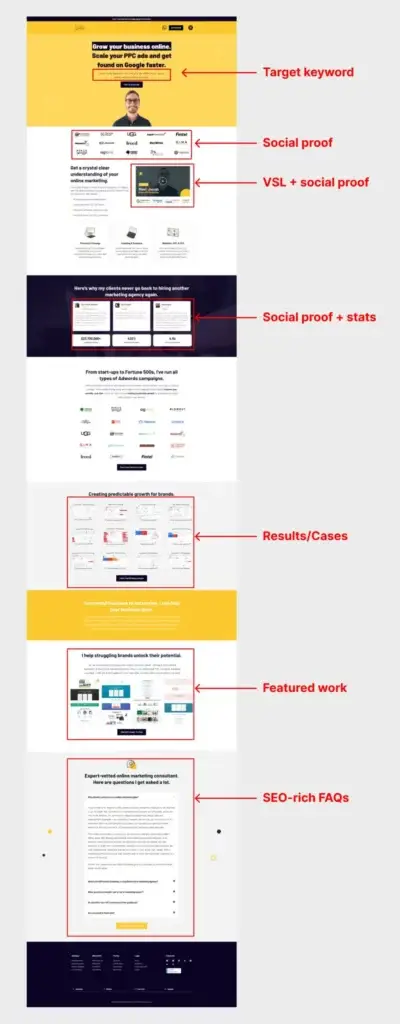
Where an ad leads is almost as crucial as the ad itself.
If the ad is the hook, think of the landing page as the net that keeps the fish from swimming away.
By reviewing your competitors’ landing pages, you can see what they’re doing right and, more importantly, what they’re doing wrong.
Is their value proposition specific?
Are they using video, testimonials, or some other form of social proof?
Are they relating to their audience’s pain points, desires, and objections?
These are the clues that can help you engineer a more effective landing page for your business.
Assessing keywords and ad longevity
Keywords are like the flavour profile in a dish; they can make or break your campaign.
Take a good look at the ones your competitor is using.
Are they high-volume keywords? Long-tail keywords?
Are they cannibalising their keywords?
This will give you a sense of their targeting approach.
And here’s where tools like iSpionage add extra value.
They can show how long an ad has been running, which is like a subtle nod to its effectiveness.
If an ad’s been around for a while, chances are it’s doing something right.
Tips for interpreting the data
Okay, so you’ve amassed this treasure trove of data.
But data is just numbers and words until you turn it into insights.
Here’s a quick primer on how to go about it:
Context matters
- Don’t just look at the keywords; consider the industry and seasonality. What works in summer might flop in winter.
Compare and contrast
- Compare the competitor’s ads to yours. Look for patterns, gaps, and opportunities.
Look for consistencies
- If you see the same keywords or phrases appearing across multiple competitors, that’s a sign it might be a good area to focus on.
That’s your cheat sheet for turning raw data into nuggets of wisdom.
Use it well.
Pitfalls to avoid
You’re not the first to venture into competitor analysis, and trust me, many have stumbled.
Here’s how you can tread carefully:
Over-adoption
Sure, your competitor’s stuff looks great.
But don’t just copy and paste.
What works for them might not work for you due to different audience nuances.
Information overload
The temptation to collect ALL the data can be strong, but try to resist.
Focus on actionable insights.
Neglecting your own strengths
In the process of examining your competitors, don’t lose sight of what makes your brand unique.
Your own voice and value propositions are just as important.
By keeping an eye out for these pitfalls, you’re not just learning from your competitors but also avoiding the traps they might have fallen into.
And that, my friends, is playing it smart.
Use what you learned to get a leg up
Spying on your competitors (in a good way!) can be like finding a secret code.
Use this intel to craft killer ads that target the same people your competitors are after.
But instead of copying them, focus on why your product or service is the ultimate solution to their problems.
This honest approach will make you look like the strongest option they’ve been searching for.
So, what have we learned?
When it comes to mastering Google Ads, understanding your competition can offer invaluable insights.
It’s not just about dissecting their keywords and phrases but also about reverse-engineering their strategies, both successful and not-so-successful.
This gives you a chance to look at the battlefield from a high vantage point, allowing you to make informed decisions.
Of course, while spying on your competitors can offer a wealth of information, it’s essential to remember that their playbook isn’t necessarily YOUR playbook.
Your brand, voice, and objectives are uniquely yours.
So, even though you’re borrowing a few pages from their strategies, you should always remember to infuse your unique brand essence into everything you do.
And here’s another nugget: data is just half the story.
How you interpret that data and adapt it to fit your specific needs is where the real game is played.
So while tools like iSpionage, SpyFu, and Semrush PPC can give you the ‘what,’ it’s up to you to figure out the ‘so what?’ and the ‘now what?’
By knowing what pitfalls to avoid, you’re setting yourself up for a less bumpy road ahead.
So go on, take what you’ve learned today and start sleuthing.
Just remember to bring your unique flair into the mix.
After all, it’s not just about playing the game; it’s about playing it well.
And hey, if you need help with your ads, I’m here for you.