
In Google Ads, “phrase match” is like the middle child in the keyword match type family.
It’s not as free-spirited as broad match, nor as strict as exact match.
Simply put, phrase match keywords allow your ads to show up for searches that include the meaning or specific phrases of your keyword.
This means if your phrase match keyword is “blue suede shoes,” your ad might appear for “buy blue suede shoes,” but not for “blue shoes” or “suede shoes sale.”
It’s a balance between reach and relevance.
Keyword match types are huge for advertisers aiming to dial in their control over where and when their ads appear.
Getting it right means your ad shows up to the right people at the right time, boosting your chances of a click or conversion.
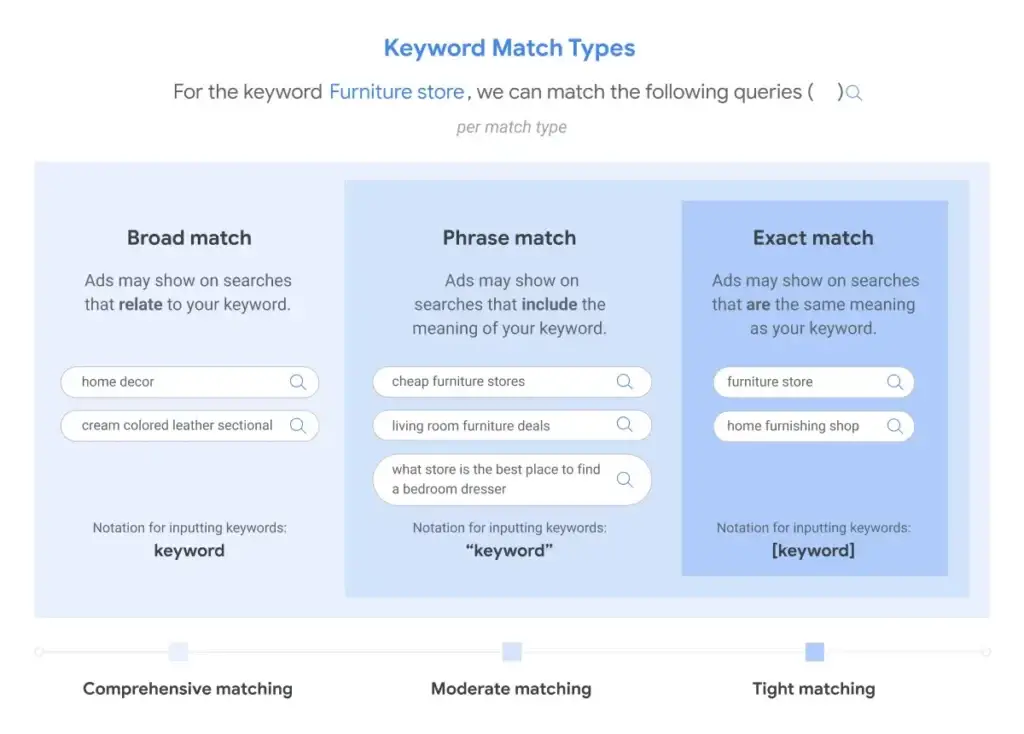
Unpacking keyword match types: Broad, Phrase, Exact
Broad match
Broad match is the social butterfly of keyword match types.
It loves to mingle, showing your ad to a huge audience.
It works by displaying your ad for searches that include any word in your keyword phrase, in any order, along with synonyms and related searches.
So, if your keyword is “gym shoes,” your ad might appear for “buy sneakers,” “running shoes,” or even “exercise footwear.”
The reach is wide, but it’s a bit of a gamble since not all clicks might be from your target audience.
For example, you might be attracting university students when they’re researching for an assignment.
Also see Keyword Cannibalisation.
Phrase match
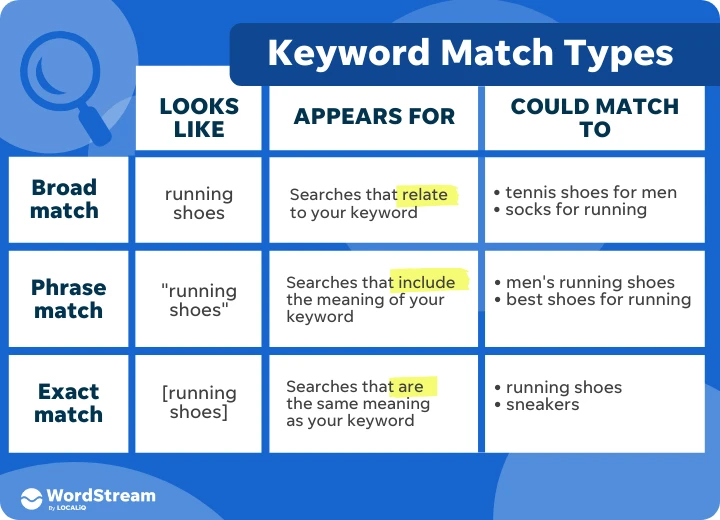
Phrase match shows your ad for searches that include your exact phrase or close variations of it, with additional words before or after.
If your phrase match keyword is “organic coffee beans,” your ad could show for “buy organic coffee beans online” or even “coffee beans organic.”
It’s a sweet spot, offering a balance between the wide net of broad match and the precision of exact match.
Exact match
Exact match is the sharpshooter, targeting with precision.
It allows your ad to show for searches that match the exact phrase or are very closely related to your keyword, including the same intent.
If your keyword is “women’s leather boots,” your ad will only show for “women’s leather boots” or close variations that don’t change the meaning.
See more here.
It’s highly specific, ensuring relevance but limiting reach.
So in a nutshell:
- Broad Match: Maximum reach, less control. Good for awareness.
- Phrase Match: Balanced reach and relevance. Ideal for targeting specific interests.
- Exact Match: High precision, limited reach. Best for targeting specific buyer intents.
Choosing the right match type is like picking your outfit for the day; it all depends on your plans (or in this case, your advertising goals).
Why choose phrase match vs broad match?
Phrase match is smart for advertisers who want control with some flexibility.
It lets your ads show when searches include your exact phrase or close variations.
This way, your ads meet searchers with intent that matches your offering.
This type of match ensures your ads are relevant.
Relevant ads tend to get more clicks.
More clicks can lead to a higher Quality Score.
Google rewards higher Quality Scores with lower costs per click and better ad positions.
With phrase match, you reach those who are looking for something specific, but you don’t shut out a bigger audience.
It’s a solid middle ground.
You spend money wisely and still cast a wide enough net.
In short, phrase match is for advertisers who aim for relevance and reach without overspending.
The evolution of keyword grouping from SKAG to STAG
Goodbye SKAG, Hello STAG (now SIAG)
Single Keyword Ad Groups (SKAGs) once dominated Google Ads, with each ad group focusing on one keyword.
This method promised tight control but led to bloated accounts, excessive complexity, and missed opportunities.
SKAGs often couldn’t capture the full scope of a user’s search intent, limiting their effectiveness.
The move to Single Thematic Ad Groups (STAG) acknowledges that people’s searches revolve around themes or ideas.
This approach clusters keywords that share a common theme, allowing for more comprehensive coverage of a topic.
Embracing Single Intent Ad Groups (SIAG)
Building on the thematic grouping of STAG, the Single Intent Ad Group (SIAG) mindset hones in on the user’s intent.
It’s about discerning not just any intent, but the specific intent to act — particularly to buy.
For example, a mattress seller might create a STAG for ‘king-sized mattress’ with a SIAG approach by including:
- ‘buy king mattress near me’,
- ‘king mattress for sale’,
- and ‘king mattress delivery’
Combining these in one ad group, all indicating a readiness to purchase.
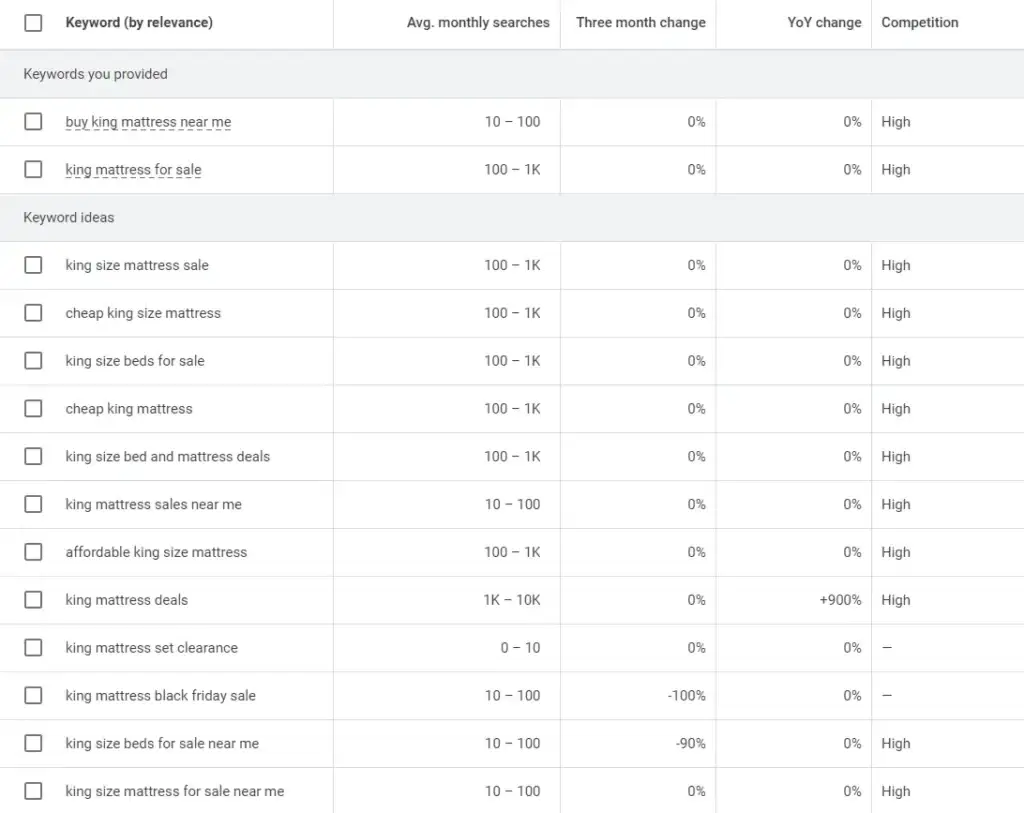
In contrast, a keyword like ‘king mattress reviews’ may not fit this group as it suggests research intent, not buying intent.
Using the SIAG mindset, an advertiser sifts through keywords, assessing them for action-oriented intent.
This careful selection ensures that each ad group is fine-tuned to capture not just a theme, but a stage in the buyer’s journey.
This avoids the trap of mixing exploratory keywords (that eat into your ads budget) with those showing specific purchase intent.
Practical ways you can use phrase match (with examples)
Phrase match can be a powerful tool in your Google Ads campaigns if you use it wisely.
Here are some actionable tips:
- Start with research: Understand the common phrases your potential customers use when they search for your products or services. Use tools like Google’s Keyword Planner for insights.
- Use negative keywords: Pair phrase match with negative keywords to filter out unwanted traffic. For example, if you’re selling eyeglasses, you might use “buy prescription glasses” as your phrase match keyword and add “wine glasses” as a negative keyword.
- Check search term reports: Regularly check the search terms triggering your ads. If you spot irrelevant phrases, add them as negative keywords.
- Structure ad groups by theme: Organise your ad groups around specific themes based on your phrase match keywords. If you sell athletic gear, you might have separate ad groups for “women’s running shoes,” “men’s basketball shoes,” and “gym workout clothes.”
- Refine your bids: Adjust your bids based on the performance of your phrase match keywords. If “buy winter jackets” is bringing in more conversions, consider increasing the bid for that phrase.
- Test and adjust: A/B test your ad copy and landing pages to see which combinations work best with your phrase match keywords.
By following these tips, you can harness the power of phrase match to connect with your target audience effectively, avoid wasted spend on irrelevant clicks, and streamline your ad groups for better performance.
Let’s wrap phrase match up (into ad groups)
Give phrase match a go in your Google Ads campaigns for its balance of control and flexibility.
Mastering Google Ads doesn’t happen overnight.
It’s an ongoing process of learning and adapting.
As trends shift and search behaviours change, your strategies should too.
Stay active in managing and revising your campaigns.
Use the data you gather — every click and every conversion is telling you a story.
Listen to it, learn from it.
It will guide you in refining your phrase match choices and using negative keywords to get the most out of your targeting.
So, embrace this journey of continuous improvement.
It’s the surest way to build stronger, more effective campaigns.
Start experimenting with phrase match and keep evolving with the insights you gain.
Your efforts will pay off in more precise targeting and better ad performance.