
TL;DR
- Put profit first: Focus on metrics that move your bottom line rather than vanity metrics like impressions and clicks.
- Find people ready to buy: Target high-intent keywords and send visitors to dedicated, relevant landing pages.
- Make your website sell: Keep landing pages simple, proof-heavy, and focused on a single call to action.
- Track every lead: Connect clicks and keywords directly to closed revenue and customers.
- Improve conversions first: Fix your conversion rate before increasing ad spend to get more revenue from existing traffic.
- Use SEO and Google Ads together: Combine paid data with organic visibility for full-funnel search dominance.
- Test before you scale: Change one variable at a time and collect meaningful data before picking a winner.
- Cut what wastes money: Audit search terms regularly and eliminate underperforming keywords and campaigns.
- Grow what makes profit: Scale winning campaigns incrementally while preserving profit margins.
Marketing should make your business more profitable.
Yet most brands still judge their marketing by website traffic, followers, impressions, or clicks.
But you and I both know that sh*t doesn’t really matter.
At least not if your bottom line isn’t moving.
That’s why profit-driven marketing is how you need to think about your marketing spend.
Every campaign, ad, landing page, and blog post should bring in more money than it costs you.
That means you need to move away from sloppy vanity metrics to the numbers that drive your business’ growth.
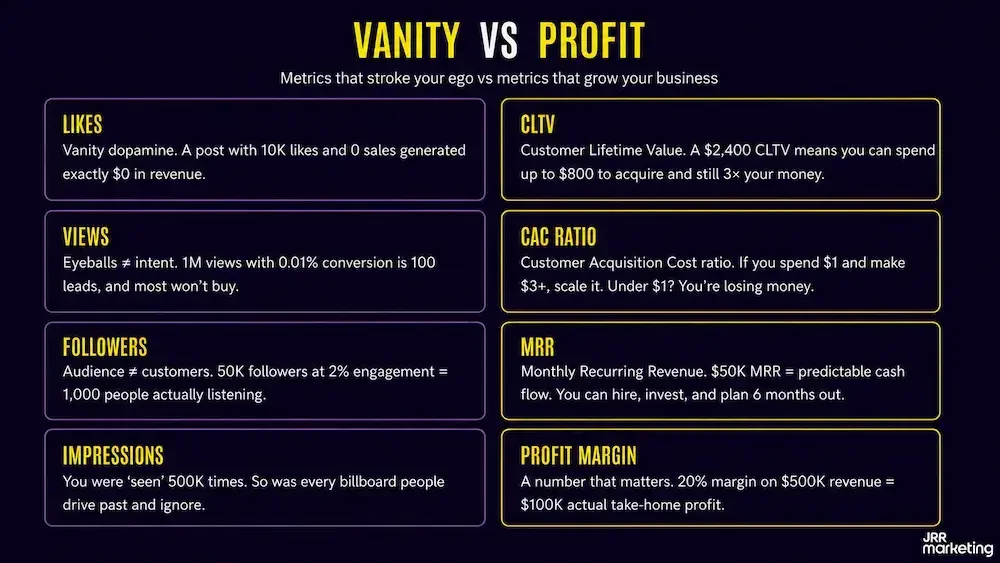
These nine profit-driven ideas will help you squeeze more from every marketing dollar.
#1: Put profit first
A profit-driven approach in marketing starts with one simple question.
"Will this make me money?"
If the answer is no, don’t spend the money.
If you’re unsure, test it first.
Instead of, "How many people visited our website?"
Ask these:
- Did we get more leads?
- Did we make more sales?
- Did we make more profit?
Use these numbers to make marketing decisions that support your business goals.
They also help measure customer lifetime value.
Take these two businesses, for example.
One gets 10,000 website visits every month but only five new customers.
The other gets just 1,000 website visitors but 50 customers.
Less traffic.
But more profit.
That’s why you need to focus on quality traffic.
Not the volume of traffic.
If you want to see what’s wasting your budget, check out our digital marketing audit service.
#2: Find people ready to buy
Landing page conversion rates vary by industry, offer, traffic source, and the action you want people to take.
Unbounce’s Q4 2024 benchmark found a median conversion rate of 6.6% across 41,000 landing pages and 464 million visits.
A broad benchmark is useful.
But the better comparison is your own page’s performance for the same audience and offer.
One of the biggest mistakes we’ve seen businesses make is not focusing on landing page experience.
The right page brings in better leads.
It’s better to get 100 people who need your service than 100,000 people who were never going to buy.
Sure, your ego tells you higher numbers are great for exposure.
But if you’re not selling anything, what’s the point?
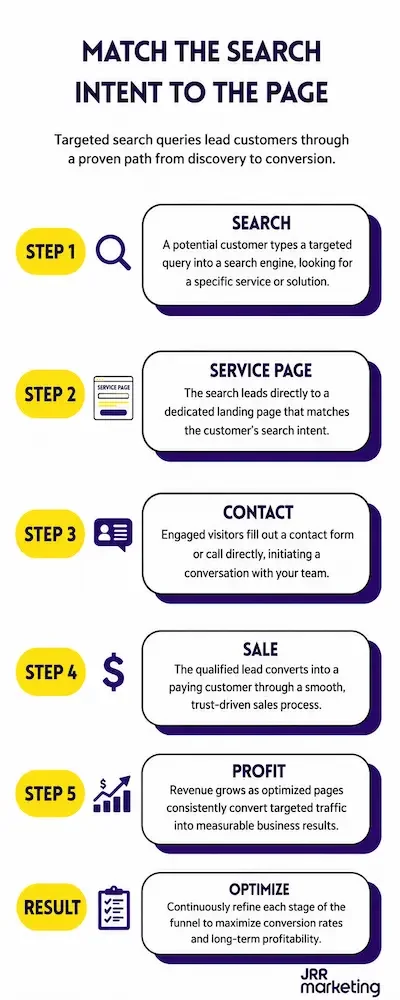
Start with the words and phrases (keywords) people type into Google when they’re ready to buy.
Match type matters too.
Exact match gives you more control, while phrase match can help you find searches you didn’t think of.
The right choice depends on your budget, goals, and how much good conversion data you have.
Then, send visitors to the page that best matches what they searched for.
The more closely your page answers their search, the more likely they’re to become a lead.
One fencing company we worked with followed that approach.
Instead of sending everyone to the same page, we created separate pages for each service and location.
We then split the Google Ads campaigns and ad groups so each keyword sent people to the most relevant landing page.
That matched each keyword and ad with a more relevant landing page.
Here’s the fence company marketing case study:
- Organic clicks increased by 366%.
- Google Ads conversions increased by nearly 77%.
- Campaigns also generated more than $102,000 in conversion value.
The company didn’t just get more traffic.
It got more people who were ready to become customers.
If you’re struggling to come up with the keywords yourself, consider hiring an SEO consultant.
#3: Make your website sell
Getting more traffic is only half the job.
You still have to turn visitors into customers.
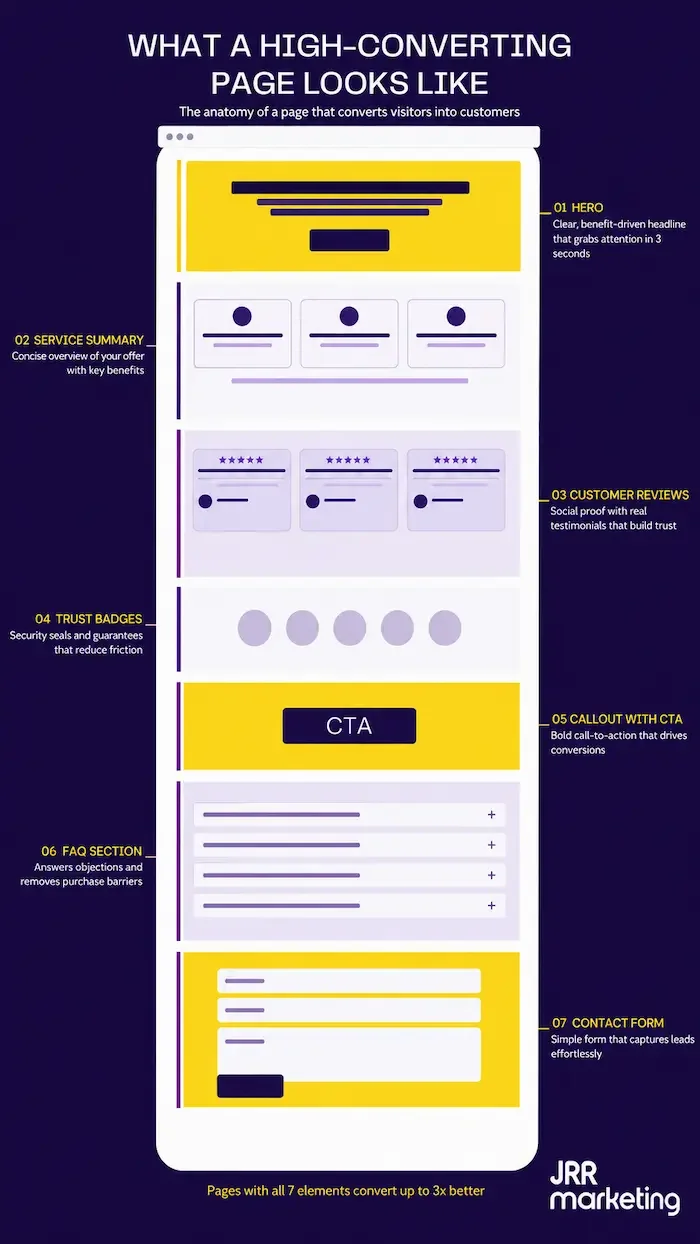
That starts with the first section people see on your website.
People decide within seconds whether you’re the right business for them.
Ask yourself:
- Does the headline match what they searched for?
- Does it show what makes your business different?
- Can they see proof so that they can trust you?
- Is it obvious what they should do next?
- Is there a persuasive reason to contact you today instead of later?
Miss any of those, and visitors may leave before they contact you.
Once you’ve earned their attention, keep the rest of the page focused on a single service and guide them towards one action.
Use simple headings.
Show real customer reviews.
Add photos of your work.
Place your contact form where visitors can find it immediately.
One A/B test increased conversions by 336% after simplifying the landing page and moving the form higher on the page.
Small improvements can help you generate more leads.
And that’s all without increasing your marketing spend.
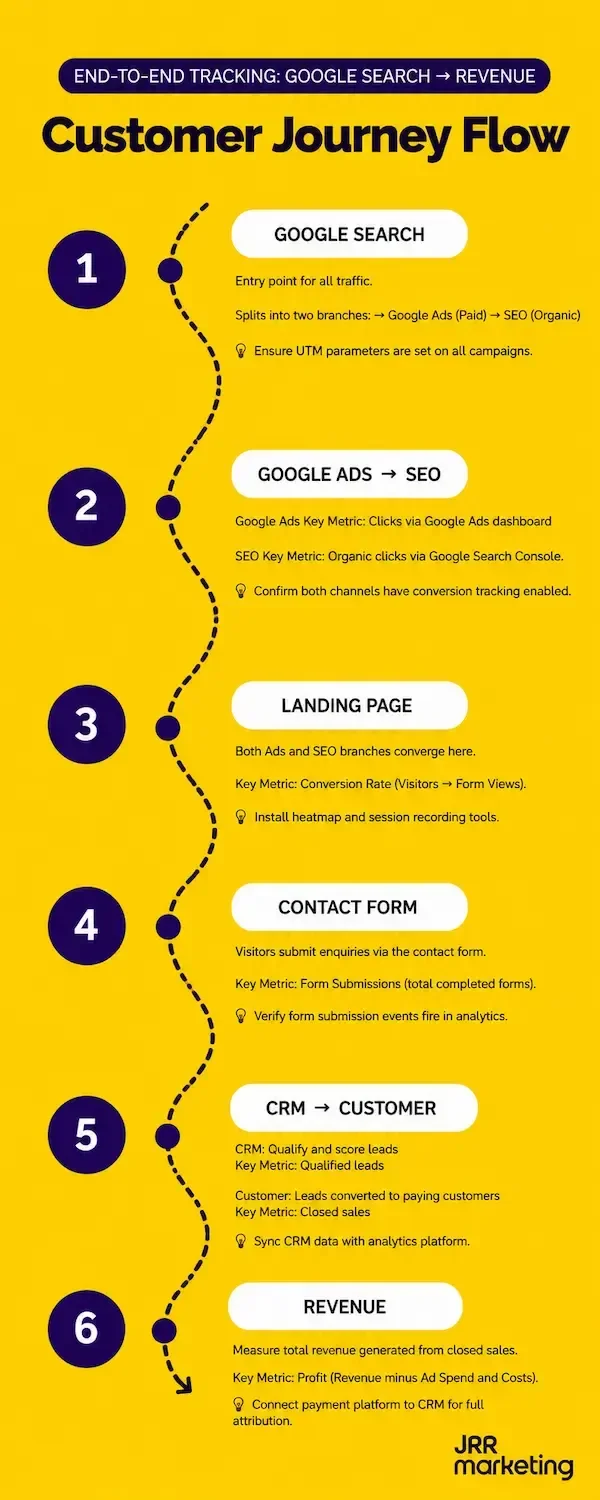
#4: Track every lead
Ever looked at a lead and thought, "Where the hell did this come from?"
If you don’t know where leads come from, you can’t spend your budget wisely.
Let automation track the boring stuff.
You’ll want to know:
- which ad brought the visitor
- which keyword they searched
- which page they visited
- whether they became a customer
Your analytics should show which campaigns deserve more investment.
It’ll also tell you which ones need improvement or removal.
Better tracking leads to better decisions and creates accountability.
#5: Improve conversions first
Many businesses spend more money when leads slow down.
That’s not always the answer.
First, look at your conversion rate.
How many visitors become leads?
How many leads become customers?
Don’t overthink it.
Even a small increase can make a big difference.
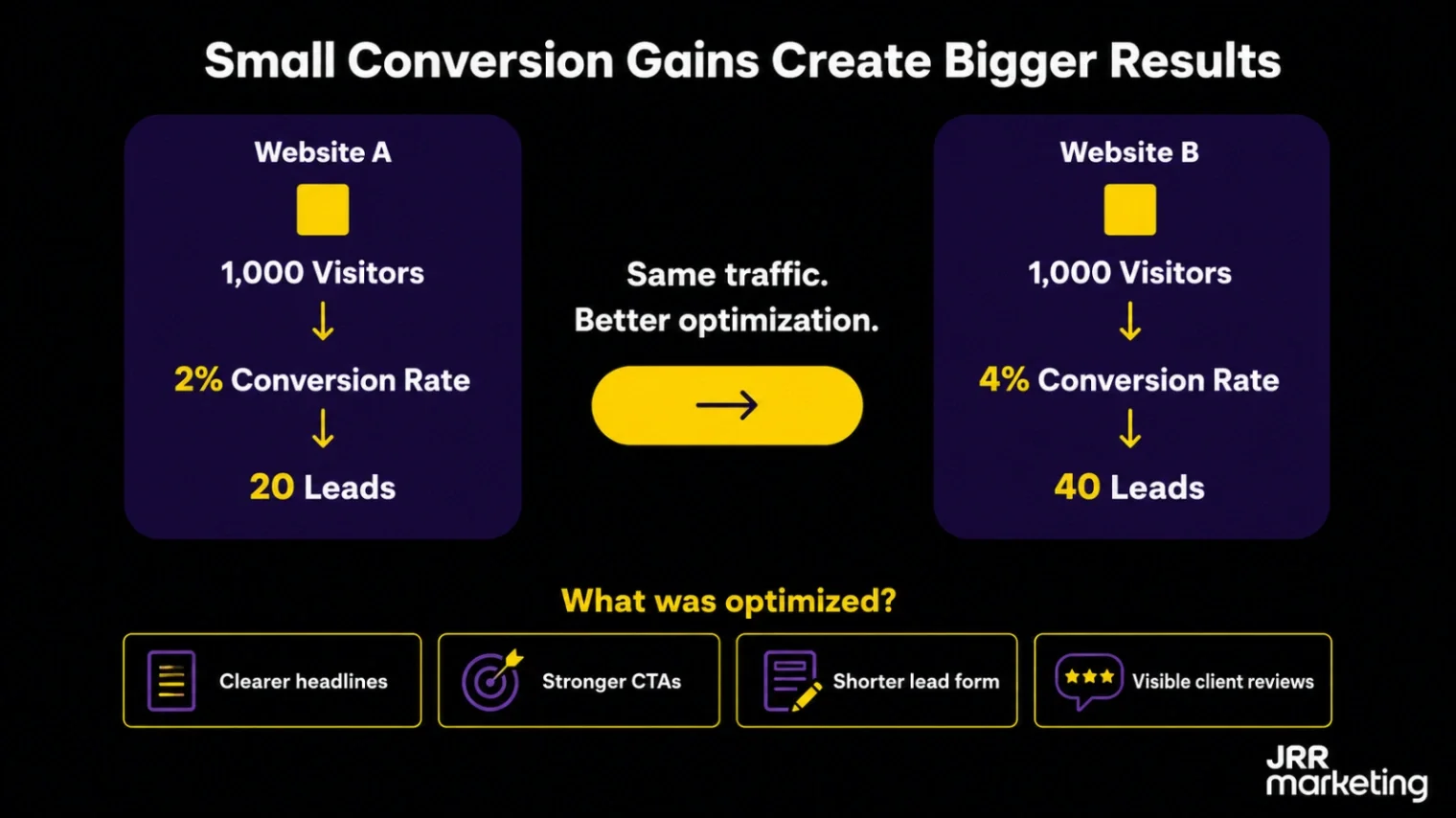
Take two websites.
Both get 1,000 visitors each month.
One turns 2% of visitors into leads.
The other turns 4% into leads.
The second website gets twice as many leads with the same traffic.
Everyone wants more traffic.
Few want to fix the website they’re already paying to send people to.
That’s usually where the easy wins are.
Start by testing things like:
- headlines
- call-to-action buttons
- lead forms
- page layouts
- customer reviews
Northwestern University’s research found that the purchase likelihood for a product with five reviews was 270% greater than one with no reviews.
The effect varied by product type, price, rating, and other factors.
Remember to change just one thing at a time.
Keep what brings in more leads, and continue to optimize what doesn’t.
Over time, those small changes can make a big difference to your profit.
#6: Use SEO and Google Ads together
In digital marketing, some people love turning SEO vs Google Ads into an argument.
You don’t have to.
Each platform supports the other.
Google Ads gives you insight into what keywords people click before they hand over money.
SEO helps you build long-term visibility around those same searches.
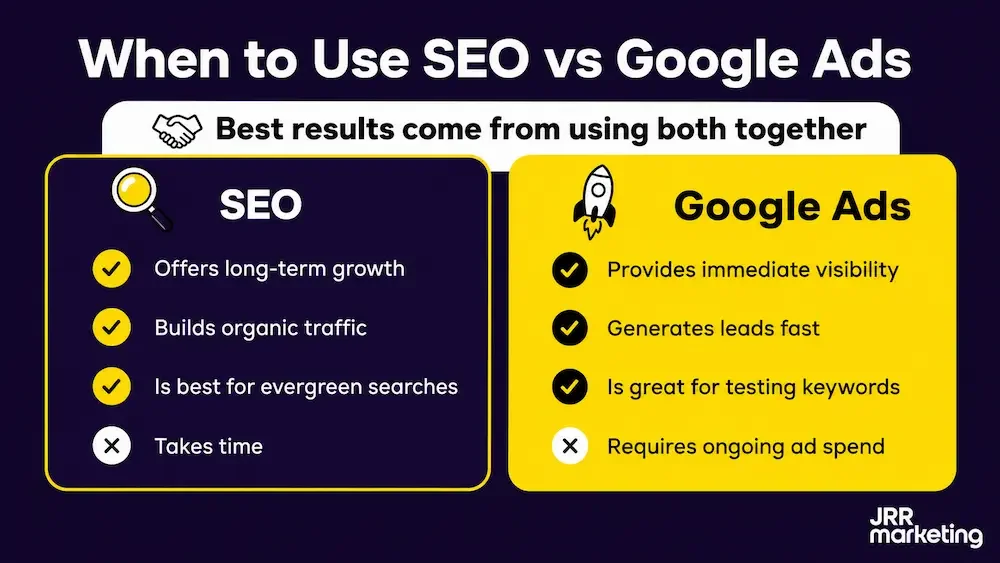
When you integrate them, it’s easier to measure what works.
Together, they help you attract more qualified leads.
#7: Test before you scale
It’s tempting to make several changes once marketing campaigns start improving.
I get it.
But resist the urge.
Test one strategy at a time so you know exactly what’s driving better results.
If you change your headline, offer, and CTA all at once, you won’t know which one made the difference.
Give each test enough time to collect meaningful data before deciding on a winner.
Keep track of what you changed and what happened.
That lets you build on successful ideas instead of repeating old experiments.
Once you’ve found a winner, keep it in place and start testing the next improvement.
Small improvements add up over time.
That helps you generate more leads without wasting your marketing dollars.
#8: Cut what wastes money
Not every campaign is worth keeping.
Some ads get plenty of clicks but very few customers.
Some pages get heaps of traffic but just don’t bring in customers.
Some keywords cost a lot and give very little back.
Don’t keep paying for something just because you’ve always done it that way.
Google recommends using the Search terms report to find searches that waste ad spend.
Also, add negative keywords where needed.
But don’t cut a keyword just because it has no sales yet.
Check the search first.
- Does it match what you sell?
- Is the landing page right for that search?
- Are people taking smaller steps, like calling or filling out part of a form?
Also ask yourself:
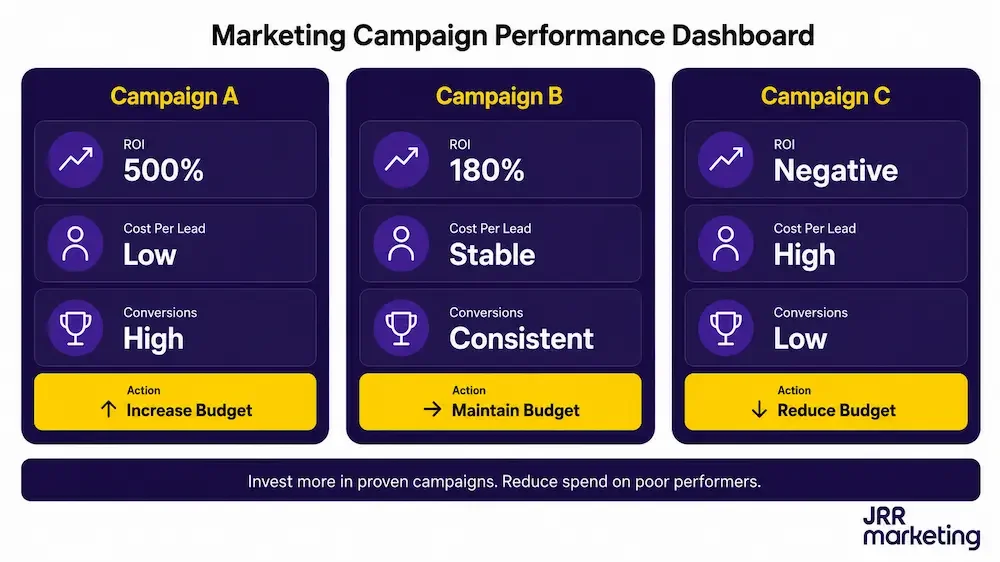
- Which campaigns make a profit?
- Which keywords bring in paying customers?
- Which pages turn visitors into leads?
- Which channels cost more than they’re worth?
Keep a strategy that’s working.
Improve anything that still has potential.
If something still isn’t bringing results, move your spend to campaigns that perform better.
If you’re unsure which campaigns are wasting your budget, a Google Ads audit can quickly identify them.
#9: Grow what makes profit
Found a profitable campaign?
Awesome.
Now scale it carefully.
Increase your ad spend gradually instead of making large changes all at once.
If your cost per lead and conversion rate stay healthy, continue investing.
If performance declines, pause and find the cause before spending more.
Then, put more of your ad spend into the campaigns, keywords, and landing pages that maximize your returns.
Our home services marketing case study shows one company that partnered with us for those things.
We improved their website.
We fixed their lead tracking.
We also worked on their Google Ads campaigns.
Every change had to earn its place.
If it didn’t improve profit-driven marketing results, it didn’t stay.
The business saw:
- 207% more conversions
- 31.5% lower cost per lead
- 40% more organic traffic
- 60% more ranking keywords
It went on to report consistent five-figure monthly sales.
Investing more in what already works helps your business grow with less risk.
If you don’t need a full-time marketer, going with a fractional CMO agency can be a good choice.
Profit comes from better decisions
Shift from vanity metrics and focus on the metrics that matter.
Profit-driven marketing is simple:
- Measure the right metrics
- Double down on what works
- Cut what doesn’t
- Repeat
Data helps you make better marketing decisions.
Ones that support sustainable long-term growth.
The bottom line to make your marketing more profitable
If your business is getting traffic but not enough leads, sales, or profit, it’s time to look at the marketing strategies holding it back.
We help service and ecommerce businesses improve their websites, SEO, Google Ads, and lead tracking.
That is at the heart of our operating model.
Whatever digital marketing service you need, our goal is the same.
It’s to help your business make every marketing dollar work harder.