

Ever walk out of a call feeling like you’re missing something?
You dress up all nice…
Spritz on your favourite perfume or cologne (the meeting is online but, you know, you do you)…
And you pitch your *ss off.
You’re on a roll.
You keep talking and selling and, before you know it, that “you have 5 minutes left” notification pops up.
Before you end the call, you hastily ask your lead about what they think.
And then you hear the dreaded answer –
“I’ll think about it.”
At that point, you just know.
You’re probably not hearing from them again.
Think of it this way — have you ever met someone who only talks about themselves?
They brag about their stuff, but never ask about you.
That’s kind of how a lot of businesses treat customers.
They focus on selling their products and features, but forget to actually connect with the person on the other side.
And that’s a recipe for disaster.
So, how can you turn things around?
This is where the self-disclosure loop flips the script.
What is the self-disclosure loop? The psychology and neuroscience behind listening
Forget the one-sided sales script.
The self-disclosure loop puts the focus on your customer.
Instead of bombarding them with features and benefits (or interrogating them)…
You’re asking the right questions and then truly listening to their answers.
Think of it like this – when someone really listens to you, it feels amazing, doesn’t it?
It makes you feel like the other person actually cares about you.
And you catch yourself oversharing.
So why does the loop work?
It’s because our brains and feelings work together.
Psychological factors
- Empathy – feeling understood is an important ingredient in building relationships. By listening closely and showing you get them (especially using their own words), you make them feel like you really care. This makes them comfortable to share even more.
- Reduced social anxiety – when we’re more anxious, we put our guards up (and we practise other self-protective disclosure strategies). And when we’re less worried, we talk more. So… when someone feels like you’re actually listening, it’s easier for them to open up more.
Neuroscience factors
- Mirror neurons and mentalising systems – as studies show, our brains use a “mirror” system (the putative mirror neuron system) to automatically sense how someone speaks. And there’s also a “mind-reading” system (or a mentalising system) to guess why they say it that way. When you listen closely, you activate both systems and you end up with a better understanding of the other person.
- Dopamine hits – this is perhaps the most important thing about the self-disclosure loop. As you know, sharing feels good. When someone opens up and feels heard, their brain releases a feel-good chemical called dopamine. This happy feeling makes them want to keep sharing more and builds a strong connection.
Even better, this kind of back-and-forth sharing feels good for both parties.
That’s why it keeps going – a loop of trust and connection.
That’s the power of the self-disclosure loop in action.
By actively listening, you build rapport with everyone in your life (not just customers).
They feel heard and understood – and this is mandatory for a positive (and profitable) relationship.
By actively listening, you get to find out a tonne of information about what they’re going through.
Their challenges, wants, needs, desires.
And what motivates them towards a buying decision.
By the end of it, you’ll have a goldmine of useful things to know that’ll help you close the deal sooner (improve your win probability).
This entire approach helps you pivot your message to their specific needs.
No more generic pitches that fall flat.
No more dicey pipelines that are feast or famine.
The more you get to know your customers, the better you can connect with them.
Ditch the monologue – why traditional sales tactics suck
Are you sick of that salesperson at every trade show who recites the same pitch to everyone?
Features, benefits, features, benefits…
Blah blah blah.
Don’t get me wrong.
I’m a huge fan of stuff that makes sales processes more efficient.
But the old way of selling just doesn’t cut it anymore.
These days, people see right through scripted sales pitches.
It feels fake and pushy, like someone’s just trying to pressure them to buy something.
Customers are smarter now.
They can spot a “canned” sales pitch from a mile away with their BS radars.
And it just makes them want to run in the opposite direction.
Fun fact – in a B2B relationship, the more you share, the more likely the relationship will progress.
And you can do the same, even in a B2C setting.
The self-disclosure loop helps you ditch the sales script and have real conversations.
This, in turn, builds trust and leads to people being happy to buy from you (not pressured into it).
Step-by-step guide to using the self-disclosure loop
Ready to ditch the awkward sales talk and actually turn leads to paying customers?
Let’s break down how to use the self-disclosure loop.
Step 1 – know your audience
To use the self-disclosure loop, you need to know your ideal customer.
What are their biggest pain points?
What keeps them up at night?
Do some research to see what common struggles they face.
This gives you the kind of questions you need to ask to get the conversation flowing.
In his book, Sales EQ, says it’s a good idea to research everything there is to know about a prospect before you hop on a sales call with them.
Step 2 – break the ice
From your research in step 1, it’s a good idea to come up with some questions for the person you’re having a meeting with.
No boring questions like “how’s the weather?”…
You need to know what gets them excited.
Start with an easy question first, like “how long have you been working at X as an X?”.
Then lead into more exciting questions…
Something like, “What are the biggest problems you face when it comes to [your industry]?”
Or “How are you guys handling the latest [policy update name]?”.
This will get them thinking and open the door to a real conversation.
Because you need to realise, their problems are very real to them.
They live and breathe different problems in their organisation on a daily basis.
You just need to know what they are and speak about them as though it’s second-nature to you.
Like you’ve been in the industry for a while.
Step 3 – listen like a therapist
Active listening — this is the secret ingredient (aside from emotional intelligence).
And there are different ways to do it:
- Look ’em in the eye – show you’re engaged in what they’re saying.
- Give ’em the nod – a little head bob now and then lets them know you’re following along.
- Don’t jump in and interrupt – always let them finish what they’re saying.
- Repeat what they’re saying — but don’t make it obvious like you’re just blatantly parroting back what they’re saying.
Tune in and give them your full attention.
They’ll feel heard and understood, making them more open to talking with you because of the little dopamine hit they get.
Hence the “loop” in the self-disclosure loop – it keeps going.
Step 4 – dig deeper
Don’t settle for the first answer.
Ask follow-up questions.
Great options are:
- “Can you tell me more about that?”
- “What makes you feel that way?”
- “Why would you say that?”
- “Have you tried x, y, and z? What’s worked?“
- “What would your perfect x look like?”
These questions help you understand their exact problems and what motivates them.
The more you know, the better you can help.
Step 5 – connect the dots
Here’s where the real work begins.
Use all that info you gathered to explain how your product or service solves their exact problems.
Forget talking about all the fancy features.
Focus on the benefits that make their life easier.
Highlight how what you sell directly addresses their challenges and makes things better for them.
But you need to do it using the exact words they used in the call to describe their situation.
Remember, it’s all about solving their problems – not just bragging about fancy features that don’t really matter.
Don’t launch into a sales pitch either.
It’s weird.
By following these steps, you say goodbye to boring, robotic sales pitches.
You’ll be having real conversations that lead into real sales.
This builds trust and helps you know what they actually need.
Studies even show that when customers feel comfortable sharing a bit about themselves, they tend to spend more.
Ultimately, this leads to more sales and loyal customers who keep coming back.
Beyond the sale – how the self-disclosure loop works for brands and businesses
The self-disclosure loop isn’t just about closing deals.
It’s a technique that benefits you in the long run.
Here’s how:
- It builds trust and loyalty – taking the time to chat with customers shows you care. They appreciate it and become more likely to stick with your brand.
- It creates brand advocates – make happy customers and guess what? They become your best salespeople. Studies show that 72% of customers share positive experiences with others, spreading the love for your brand.
- It steers your marketing strategy – think of it like eavesdropping on what your customers really want. By listening closely, you can improve your product and marketing to perfectly fit their needs. This helps to know what to say on your landing pages and website.
Who needs sales tricks when you can have real customer feedback?
Focus on building relationships, not just making a quick sale.
Self-disclosure loop in action — examples across industries
The self-disclosure loop isn’t a magic trick that works the same way everywhere.
Let’s see how it can be used in different businesses.
#1 — an online clothing store
Brands like Timberland are getting to know their customers on a deeper level.
They try surveys and pop-ups to send personalised content to their customers.
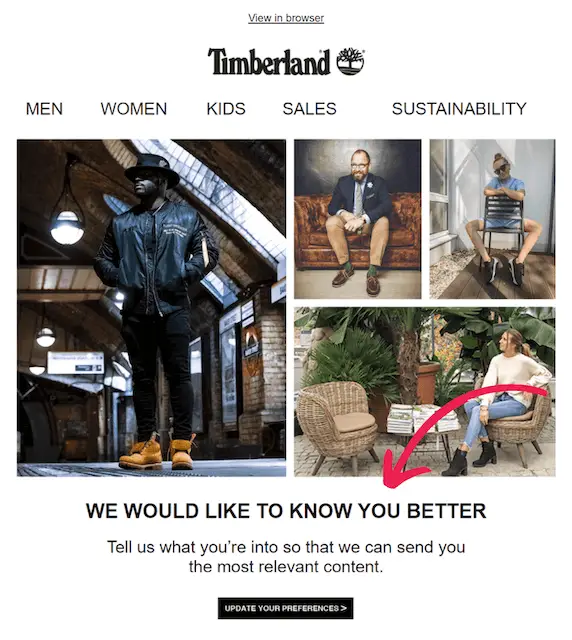
And you can do the same.
Those more generic “new arrivals” emails are great.
But, sometimes, they’re not enough.
Instead, you can trigger the self-disclosure loop, and ask your customers about things like, “What’s your style?”
By listening to their answers, you can send you emails with clothes you’d actually wear.
No more overflowing inbox with stuff they wouldn’t touch.
Just a special selection of things they’d actually want to buy.
#2 — marketing, consulting or PR firms
Normally, they’d just rattle off a pre-written sales pitch during their first meeting.
But with the self-disclosure loop, it’s different.
The agency rep asks deeper questions to get to know the prospect’s business.
They might ask things like:
- “What’s your biggest hurdle when it comes to reaching your ideal customers?”
- “What have you tried so far?”
- What’s worked, what hasn’t?”
- “What’s your revenue at now?”
- “Where do you want to be in 3, 6, 12, 24 months?”
By listening closely to the brand’s needs and goals, the agency can create a more bespoke marketing plan that’s perfect for them.
And trust me, it works.
#3 — customer service teams
Imagine calling about a broken product.
You’re super annoyed.
Tired, and frustrated you went through the effort of buying the thing…
Only to have to go through the hassle of returning it because it fell apart in minutes.
When you get on the phone, the customer service rep absorbs everything you have to say like a sponge.
They get that you’re annoyed.
They’re patient.
And they don’t reply using the same damn robotic sales script that’s in their “procedures” to follow.
Everybody hates a rep that makes you repeat yourself because they’re not listening.
A superstar of a rep might ask:
- “I get that, I’d be really frustrated if that happened to me. Can you tell me more about what happened as it happened?”
- How can we make it up to you? I really want to be able to get this underway for you ASAP.
You get the idea.
By listening to your specific problem, they can find a faster solution that works for both of you.
No negative reviews on yelp or Google.
Crisis averted.
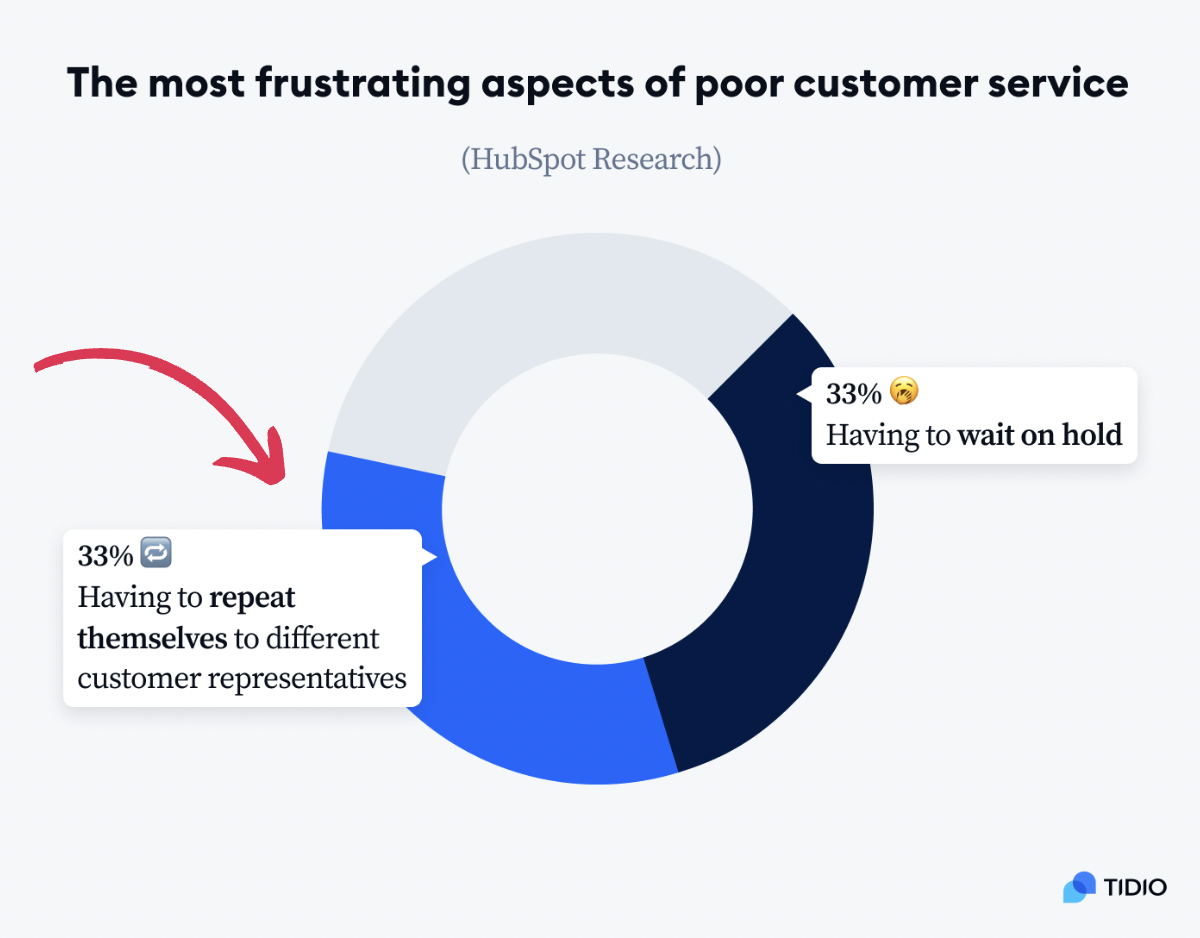
The cool thing is: the self-disclosure loop works in all sorts of businesses.
Think about your own job.
How can you use questions to really dig into what your customers need?
Based on their answers, how can you adjust your approach to better serve them?
Get creative and see how your customer interactions become way more interesting.
When done right, you’ll actually find yourself looking forward to your next sales or client meeting.
Using dopamine hits to your advantage
The big takeaway?
Talk to your customers, for real.
Keep them talking, they feel better about it.
That creates the loop you’re looking for.
They spill the beans, you get what info you actually wanted, everybody wins.
It creates:
- Happy customers = loyal fans
By listening and showing you care, you make customers feel good. This builds trust and makes them want to stick with you.
- Better sales calls
It’s like having a cheat sheet to keep winning people over. The more you know about your prospect’s problems and desires, the better you can relate to them.
Remember, the self-disclosure loop isn’t a rigid formula.
Get creative – think about how you can use these ideas in your own business.
Every time you chat with a customer or prospect, it’s a chance to learn something new and build a stronger relationship.
And by using the self-disclosure loop, you can use science to create an experience that’s more enjoyable for them – and eventually, for you.