

If you’re running a business, there’s no denying that digital marketing can provide huge benefits.
But to get the most out of your campaigns, you need to track key performance indicators (KPIs).
What are KPIs?
Digital Marketing KPIs provide an easy way to gauge how effective your online marketing is.
They can help you measure how successful you are in achieving your goals, allowing you to adjust your strategy accordingly.
Setting measurable milestones along the way can help keep you on track and motivated as you work towards reaching your desired outcome.
And the process of measuring growth should be as simple as possible.
You should always aim to break down complicated metrics into easily digestible pieces and explain them in plain language.
By simplifying the information, everyone in your organisation will better understand what they need to do to reach their goals.
This makes it easier for everyone to work together towards common objectives.

So, which digital marketing KPIs should you be tracking?
It’s essential to set defined goals when it comes to identifying your KPIs.
Think about what you want to accomplish and use the right data and metrics to ensure your objectives are realistic.
Approaching an experienced digital marketing consultant can help you figure these metrics out quickly.
Here are some mandatory digital marketing KPIs your business absolutely must track if you’re aiming to measure your online success.
1. Organic traffic
Start with organic search traffic.
This will show you the number of visitors who arrived at your site through a search engine like Google or Bing.
Organic SEO traffic can be a great indicator of your online business’s overall growth.
It shows how well you can drive relevant, high-value visitors to your site through unpaid search engine results.
By tracking organic SEO traffic, you gain important insights into the effectiveness of your SEO strategy and can identify areas for improvement.
Additionally, this kind of inbound website traffic is more likely than paid search advertising methods to generate leads that will convert into customers over time — making it even more essential to keep track of.
You can use a tool like Ahrefs (highly recommended) or Semrush to keep track of this.

2. Conversion rates
Tracking conversion rates are essential for any business having an online presence.
It basically helps track how effective your marketing campaigns have been and which steps of the buyer’s journey have been most successful.
Conversion rates can help companies discover what works best on the website, such as call-to-actions, forms and other persuasive tools that move people through the sales process.
It’s impossible to measure success online without gauging how many visitors convert into paying customers or even just subscribers for an email list.
Without tracking this data, businesses would not know if their efforts were worth the investment or if any changes need to be made to reach their goals.
Knowing from which sources a company gets the most conversions is critical to creating repeatable targets over time.
Website conversion rate tracking also provides insight into areas where improvements can be made to increase website traffic and maximise profits.
To put it simply, tracking conversion rates is one of the best ways for businesses to measure the impact of their marketing strategies and gain valuable insight into how to take their company to the next level.
3. Customer Acquisition Cost (CAC)
Customer Acquisition Cost (CAC) measures how much it costs to acquire a new customer, considering all related marketing investments like advertising and website design.
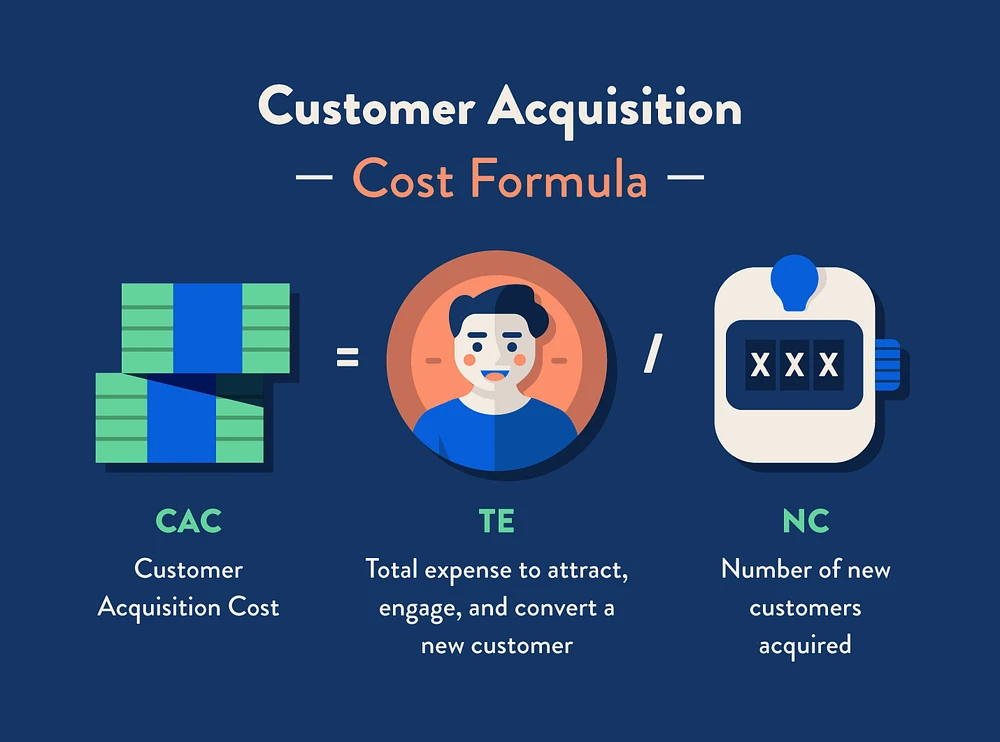
Measuring CAC helps you identify the marketing channels driving the most revenue and provides insight into where you should spend your budget for maximum returns.
In addition, understanding the CAC helps you measure how effectively your campaigns drive sales.
If your CAC exceeds the value of each new sale, this indicates that changes need to be made to get better returns on investment.
By tracking CACs, businesses can continually adjust their advertising strategies accordingly, thus ensuring beneficial and cost-effective results.
4. Average time on page
Knowing how long visitors stay on each page can help give you a better understanding of user engagement and your website’s overall performance.
For example, if visitors spend a shorter amount of time on your shopping cart pages than on other pages on your website.
This could indicate that something needs to be done to provide a better experience.
Average page time is an incredibly important ranking factor that Google considers.
Why?
Because when it comes down to it, users spend a short time on a page when it doesn’t contain all the information they’re looking for.
That’s why Google Analytics allows us to track Average page time.
This way, we can gather rich insights into our web content and make adjustments to keep users engaged and optimise our SERP rankings on Google.

Tips for avoiding vanity metrics
Beware of vanity metrics.
They are deceptive and don’t provide any real value in assisting with achieving your business objectives.
After all, you can’t take ‘likes’ to the bank.
Rather than fixating on figures that don’t move the needle, shift your focus to metrics with genuine significance.
Concentrating on these key performance indicators will support you in achieving objectives of true value for your business.
Let’s take Google Analytics as an example.
It helps us to understand vanity metrics such as page views and impressions.
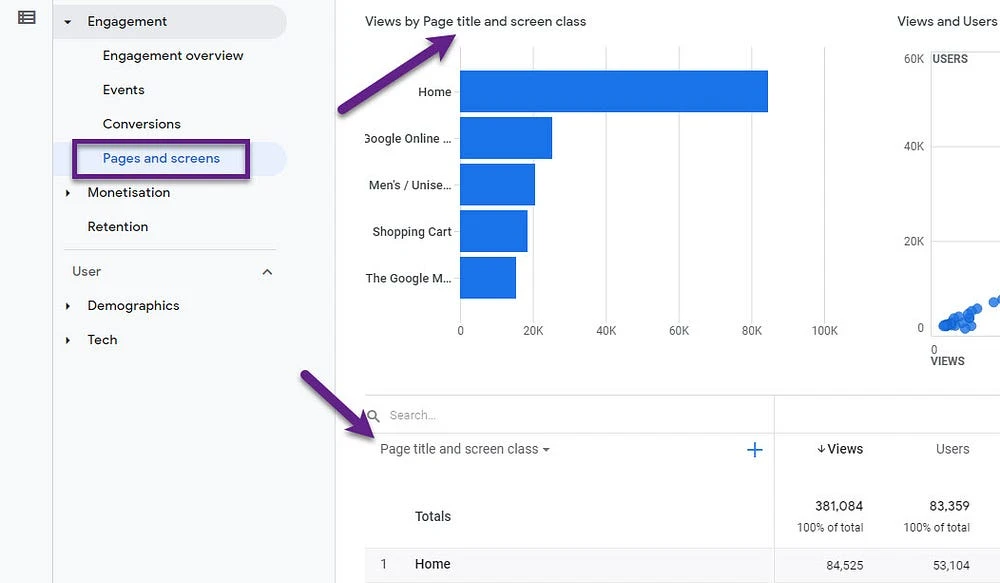
Unfortunately, relying on these numbers won’t provide the full picture of a campaign’s success.
However, when it comes to sales conversions, it is crucial to take action to understand the reasons behind low numbers.
Ensure that the checkout feature of your e-commerce site works properly.
Also, check if there are any issues with the website itself.
To hit your goals, you must know the metrics that don’t matter.
These ‘vanity’ stats can look good on paper but often fail to measure success or improvement accurately.
Here are five vanity metrics you should avoid.
1. Followers are a terrible idea for measuring “success”
Buying social media followers may seem like a good idea on the surface but if your goal is to measure online success, it’s a terrible idea.
‘Fake’ followers can artificially inflate your following count and leave you feeling like you’re winning when in reality, there are no true engagements happening.
Sure, you might get high impressions or clicks — but these metrics don’t mean anything when it comes to actual sales.
While more followers look impressive, it doesn’t actually help you reach your sales goals.
In most cases, the dreaded block bots are what companies are buying, which do nothing but inflate numbers with no genuine engagement or influence.
Additionally, simply having a lot of impressions and clicks on a post isn’t indicative of sales or an increase in brand visibility .
True success lies in developing relationships with engaged followers and building brand loyalty.
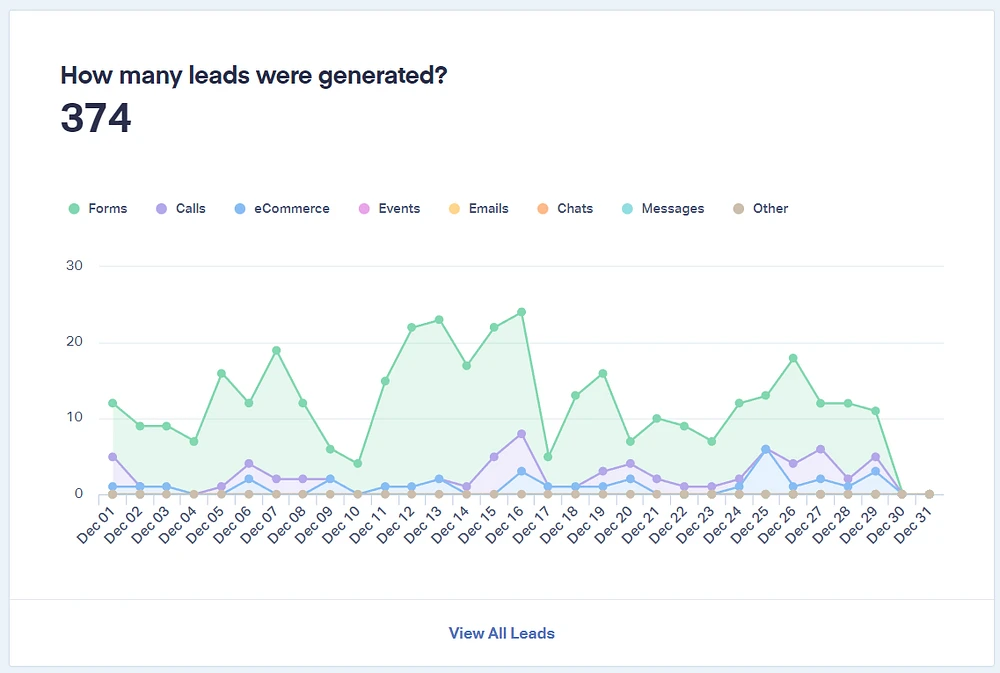
2. Not all leads are equal; high numbers don’t equal success
Too much advertising can be a double-edged sword.
While you may get more website traffic and leads, the quality of those new contacts could be better.
Focus on customers who understand and value what your business offers rather than just a large number of leads.
3. Unexpected website traffic isn’t a sign of predictability
Website traffic plays a significant role in determining the success of any marketing team and its campaigns.
But it’s not always easy to understand what caused an uptick in visitors or how to maintain these new numbers.
While an increase is usually celebrated, it can be complicated to replicate the results consistently.
Did that happen from a recent promotion or offline campaign, or was it something else?
The answer lies in understanding what sources the traffic is coming from and whether it’s organic or paid.
Tracking website traffic accurately can help you identify unexpected increases, gain valuable insights into what’s working, and understand how to replicate the results for future campaigns.
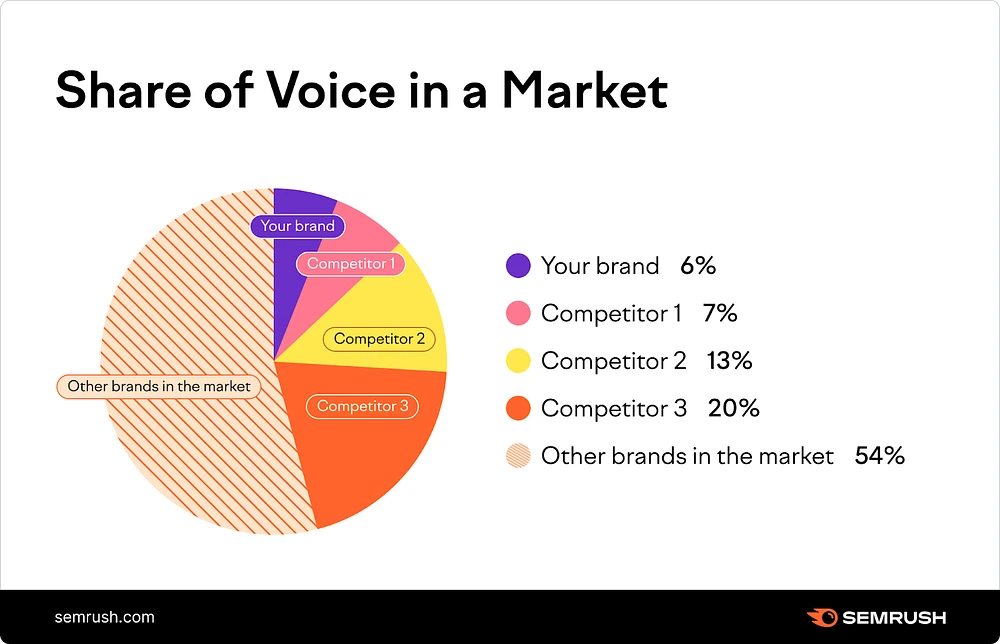
4. Share of voice?
Share of voice is a metric used in marketing to measure the visibility of a certain brand or product.
It is typically done by analysing media coverage, conversations on social media, and other analytics-related data points.
Whilst on the surface, it looks like an effective way to measure company performance, for small to medium-sized businesses, it can be difficult to access and make use of its data.
Large corporations have the luxury and budget needed to afford the tools which accurately measure share of voice — however, this doesn’t always translate into reliable or meaningful results.
It’s easy for CMOs of bigger companies to spin or even manipulate the numbers to report false numbers to the C-Level execs expecting some compelling insights.
As a result, the share of voice metrics is not necessarily applicable nor realistic for small businesses whose resources, budget, and capabilities may be limited.
So even though there are tools out there for measuring share of voice.
For small to medium businesses, it’s best to stick with the aforementioned KPIs that prove reliable over time.
Unlock your growth potential by tracking the right metrics
It’s essential to track marketing metrics to measure the success of your campaigns.
However, it’s important to ensure that you track the right digital marketing KPIs for your business and industry.
While there may be some vanity metrics that look impressive on the surface, what matters most is understanding how these numbers will impact your bottom line.
Focus on metrics that offer meaningful insights into your customer base and what resonates with them.
Track website traffic, engagement rates, customer lifetime value, conversion rates etc., so that you can make informed decisions about your marketing efforts and reach your business goals.
By understanding which metrics are key to success, you can unlock growth potential and position yourself as a leader in your industry.