The Challenge
Ad-platform conversions didn't show which enquiries carried case value
The firm already knew which cases were most valuable. The missing piece was a search system that separated those priorities, gave each one the right landing path and tied every enquiry back to case value.
What the audit uncovered
The legacy website was slow, clunky and difficult to scale across the firm's full page library
Different criminal charges needed separate budgets, search terms and landing paths
The website had to convert urgent searches without making legal-outcome promises
Calls, forms and intake updates needed one traceable reporting chain
The situation
For a criminal defense firm, a lead total hides the commercial picture. A call about the wrong issue and a viable felony case both count as one conversion inside an ad platform. The system needed to show what happened after the click.
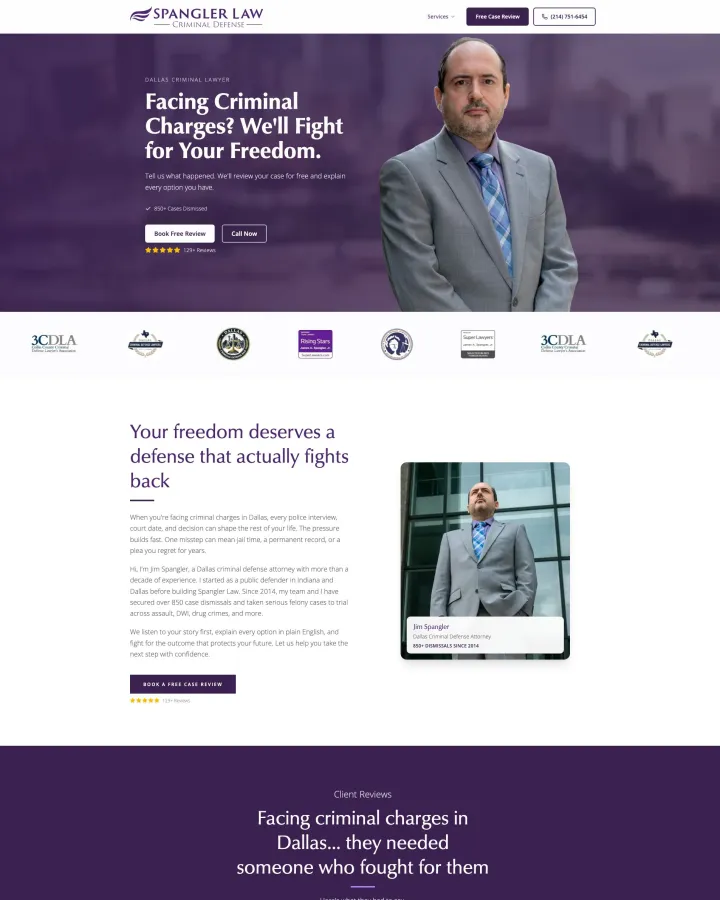
We replaced the slow, clunky legacy website with an AI-assisted React rebuild spanning 61 indexed site pages and a 101-article SEO library. The new site was built around the decisions prospective clients make under pressure: what the charge could mean, why this firm is credible, what happens next, and how to request a free case review.
Google Ads was split into six Dallas campaigns so general criminal defense, sex crimes, DWI, drug crimes, domestic violence and wider service searches could be managed independently. That made budgets, search terms and landing destinations easier to control around the firm's case priorities.
SEO supported the same practice-area structure instead of operating as a separate project. Calls and forms then flowed through WhatConverts and Lawmatics, with case value attached to opportunities as intake records were updated.
For the wider acquisition model, see our law firm marketing agency service and lawyer PPC agency service.